Funky Town Font: Vintage Street Style for Modern Design
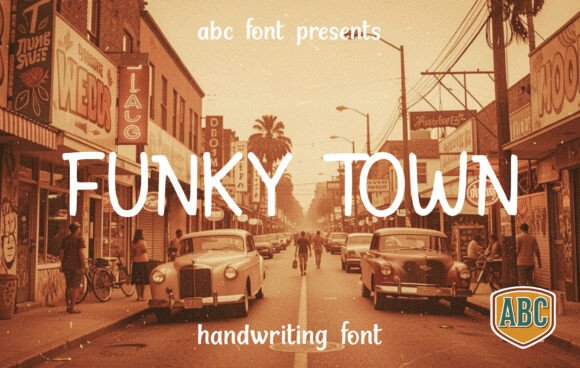
Take a walk on the vibrant side with Funky Town, a handwriting font that perfectly captures the gritty, energetic spirit of vintage street life. In a digital landscape often saturated with polished, geometric sans-serifs and sterile corporate typography, this typeface offers something distinctly human. It is designed with a loose, casual rhythm and varying stroke widths that make the text feel alive, echoing the spontaneous creativity of retro city signage and hand-painted urban murals. For designers and creators seeking to inject authentic character into their work, Funky Town serves as a bridge between nostalgic aesthetics and contemporary application.
The typeface is not merely a decorative element; it is a tool for storytelling. Its slightly irregular letterforms and tall, narrow silhouette mimic the physical constraints of painting on brick walls or wooden crates. This inherent texture makes it an ideal choice for projects that require a sense of history and place. Whether you are designing retro-themed posters, indie apparel branding, street photography captions, or edgy editorial headers, Funky Town thrives in high-contrast environments. It brings a sense of nostalgic cool to any project that needs to feel storied, lived-in, and unapologetically bold.
Understanding the Anatomy of Urban Typography
To use Funky Town effectively, it helps to understand why it works visually. The font’s vertical stress and condensed proportions allow for tight spacing without sacrificing legibility, a crucial trait derived from actual sign painting where canvas space was expensive and limited. The varying stroke width simulates the pressure of a brush or marker, creating a dynamic baseline that prevents the eye from glazing over. Unlike digital fonts that rely on perfect repetition, Funky Town celebrates the beautiful imperfections of the city streets.
This organic quality means the font carries its own weight. You do not need to add excessive texture overlays or grunge effects to make it look authentic; the authenticity is baked into the vector paths. When selecting this typeface, recognize that it performs best when treated as a primary voice rather than background noise. It demands attention and sets a specific tone immediately. Understanding this allows you to pair it correctly with supporting elements that enhance rather than compete with its raw energy.
Practical Applications Across Creative Disciplines
The versatility of Funky Town extends beyond simple nostalgia. Different creative professionals can adapt this typeface to serve distinct functional goals while maintaining its core aesthetic appeal.
Branding and Packaging for Indie Markets
For small business owners and entrepreneurs in the artisanal space, packaging is often the first physical touchpoint with a customer. Funky Town works exceptionally well for coffee roasters, craft breweries, vinyl record shops, and vintage clothing stores. The key here is hierarchy. Use the font for the product name or a short, punchy tagline, but switch to a clean, neutral sans-serif for ingredients, legal text, and nutritional information. This contrast ensures compliance and readability while letting the brand personality shine through the headline. The tall silhouette of Funky Town also maximizes shelf presence, allowing for larger text within narrow label dimensions.
Editorial and Digital Content Creation
Bloggers, publishers, and marketers can utilize Funky Town to break up dense content and create visual anchors. In editorial layouts, use it for pull quotes, sidebar headers, or feature titles to evoke a zine-like, DIY sensibility. For social media graphics, particularly on platforms like Instagram or Pinterest, the font’s bold character ensures legibility even at thumbnail sizes. However, avoid using it for body copy or long-form captions. The irregularity that gives it charm at display sizes becomes a hindrance to reading speed in paragraphs. Reserve it for moments where you want the viewer to pause and absorb a specific sentiment or call to action.
Event Design and Environmental Graphics
Event organizers and educators creating workshop materials can leverage Funky Town to set an immersive atmosphere. For music festivals, art walks, or community markets, this typeface signals an informal, welcoming, and culturally rich environment. It translates beautifully to large-format printing on banners, chalkboards, and wayfinding signage. Because the letterforms are naturally loose, they photograph well in situ, avoiding the uncanny valley effect that sometimes occurs when pristine digital fonts are placed in gritty real-world settings.
Strategic Pairing and Layout Recommendations
A common pitfall when working with expressive handwriting fonts is overuse. To keep results clear, effective, and professional, treat Funky Town as the soloist in an ensemble. Here are practical guidelines for integration:
- Contrast is Key: Pair Funky Town with structured, geometric typefaces. A monospaced font creates a modern, utilitarian tension that highlights the organic nature of the handwriting. Alternatively, a classic serif adds a layer of sophistication that grounds the playfulness.
- Mind the Kerning: While the font is designed with a casual rhythm, manual kerning adjustments may be necessary depending on your specific word combinations. Avoid tightening the tracking too much; the air between the letters is part of the design. Let the natural swashes and tails breathe.
- Color Context: High-contrast color palettes amplify the font's impact. Cream text on charcoal, bright yellow on navy, or muted terracotta on off-white all reinforce the vintage street vibe. Avoid low-contrast pastel combinations unless you are intentionally aiming for a faded, weathered look.
- Scale Appropriately: Display fonts lose their nuance when scaled down. Ensure Funky Town is used at a size where the stroke variation is clearly visible. If you find yourself needing to use it smaller than 24pt (in print equivalent), reconsider your hierarchy or choose a different typeface for that specific element.
Maintaining Authenticity Without Cliché
Inject some soul into your creative toolkit, but do so with intention. There is a fine line between genuine appreciation of vintage aesthetics and superficial pastiche. To avoid the latter, focus on the context of your message. Funky Town is appropriate when the content relates to craftsmanship, local culture, music, art, or personal expression. It feels disjointed when applied to corporate financial reports, medical advice, or luxury tech products.
Consider the medium as well. This font has roots in physical application. Even in digital designs, mimicking the logic of physical space helps maintain coherence. Align text to a grid that feels hand-adjusted rather than mathematically perfect. Allow for slight rotations or baseline shifts if your software permits, reinforcing the idea that a human created this layout. By respecting the origins of the style, you ensure that your use of Funky Town feels like a thoughtful design choice rather than a trendy overlay.
Elevating Projects with Raw Energy
Ultimately, typography is about communication. Funky Town communicates warmth, accessibility, and creative confidence. It tells the audience that there is a person behind the brand, a story behind the product, and a community behind the event. For freelancers and agencies, offering this level of stylistic specificity demonstrates an understanding of niche aesthetics and audience psychology.
When you choose to take a walk on the vibrant side, you are making a commitment to stand out. Use this typeface to highlight what makes your project unique. Whether it is the header of a portfolio site, the logo for a pop-up shop, or the title card for a documentary, let the irregular letterforms carry the emotional weight of your message. By balancing inspiration with practical execution, Funky Town becomes more than just a font; it becomes a vital component of a cohesive, memorable visual identity that resonates with audiences tired of the ordinary.