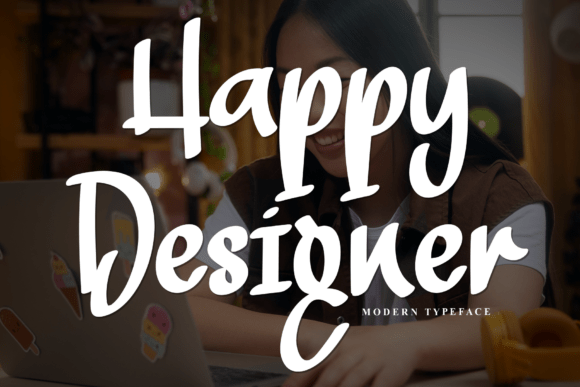
Happy Designer: A Charming Handwritten Display Font
Typography often serves as the emotional anchor of a design project, setting the tone before a single word is processed by the reader. Happy Designer is a handwritten display font that captures this sentiment through delightful simplicity and adorable allure. Unlike rigid geometric sans-serifs or overly complex scripts, this typeface radiates a heartwarming and playful vibe. Its bubbly personality and friendly character make it an immediate choice for projects requiring warmth, yet its utility extends far beyond mere aesthetics. Understanding how to leverage this specific visual voice requires looking at it through the lens of different creative goals, skill levels, and practical constraints.
Defining the Visual Voice of Happy Designer
At its core, Happy Designer is crafted to exude approachability. The letterforms mimic natural handwriting but maintain enough consistency to remain legible in display settings. It avoids the chaotic unpredictability of some grunge fonts while steering clear of the sterile perfection of digital scripts. This balance creates a sense of joy and fun instantly, making the viewer feel welcomed rather than instructed. For designers evaluating typefaces, the primary value here is emotional resonance. It is not designed for body copy or dense informational text; rather, it functions as a spotlight, drawing attention to headlines, signatures, or short phrases where personality matters more than information density.
Priorities for Wedding Planners and Stationery Designers
For professionals in the wedding and event industry, typography is synonymous with first impressions. Happy Designer offers a distinct alternative to traditional calligraphy. While classic scripts convey formality and heritage, this font suggests a modern, relaxed celebration. When designing invitations, save-the-dates, or seating charts, the priority is often balancing elegance with personalization.
- Tone Matching: Use this font for couples who want their wedding to feel intimate and joyful rather than stiff and ceremonial.
- Pairing Strategy: Combine Happy Designer with a clean serif or minimalist sans-serif for logistical details like dates and addresses to ensure readability without sacrificing charm.
- Customization: The hand-drawn aesthetic allows for easier integration with watercolor illustrations or organic textures common in modern stationery suites.
The commercial value for this demographic lies in versatility. A single license can cover everything from the initial invitation to the thank-you cards, providing a cohesive brand identity for the event itself. The font’s sweet style helps differentiate bespoke stationery from generic templates found on mass-market platforms.
Educators and Content Creators Seeking Engagement
The needs of educators, bloggers, and social media creators differ significantly from print designers. Here, the priority shifts from static elegance to dynamic engagement and accessibility. In educational materials, particularly for early childhood or special education, typography impacts cognitive load and emotional safety. Happy Designer’s rounded, friendly forms can reduce anxiety associated with learning, making worksheets, flashcards, and classroom decor feel less intimidating.
For digital content creators, the font serves as a pattern interrupt. Social media feeds are saturated with bold, aggressive headlines. A softer, handwritten display font stops the scroll by offering a moment of visual gentleness. However, creators must evaluate technical reliability alongside aesthetics. Does the font render well on mobile screens? Do the unique ligatures remain distinct when scaled down for Instagram stories or Pinterest pins? Testing across devices is essential to ensure the "adorable allure" translates effectively to pixel-based environments.
Practical Application for Small Business Owners
Entrepreneurs and small business owners often wear multiple hats, acting as both CEO and lead designer. For this group, ease of use and speed are paramount. They may not have formal typographic training, so they rely on fonts that look professional straight out of the box without requiring extensive kerning or manual adjustment. Happy Designer supports this workflow by offering consistent spacing and balanced weight distribution.
Consider a boutique bakery launching a new seasonal menu or a handmade jewelry shop updating their packaging. The goal is to communicate authenticity and care. Using a standard system font might imply mass production, whereas a handwritten display type signals artisanal quality. However, business owners must also consider long-term usefulness. Is this font trendy enough to capture current attention but timeless enough to last through a rebrand? Because Happy Designer focuses on fundamental warmth rather than fleeting stylistic gimmicks, it tends to age better than highly stylized novelty fonts.
Evaluating Suitability Based on Skill Level
Different users will extract different values from the same typeface based on their technical proficiency and creative confidence.
For Beginners and Hobbyists
If you are new to design, your primary concern is likely avoiding mistakes. Happy Designer is forgiving. Its inherent imperfections are part of the design, meaning slight alignment issues or spacing variances look intentional rather than erroneous. This makes it an excellent learning tool for understanding hierarchy and emphasis without the pressure of achieving typographic perfection. Beginners can use it to add instant polish to personal projects, scrapbooks, or DIY gifts, gaining confidence as they see how much a single font choice can elevate their work.
For Experienced Professionals
Seasoned designers evaluate fonts based on flexibility and glyph sets. You are looking for OpenType features, alternate characters, and multilingual support. When assessing Happy Designer, professionals should examine the character map for unique swashes or contextual alternates that allow for custom wordmarks. The value proposition here is efficiency; having built-in variations saves hours of manual customization. Furthermore, experienced users understand licensing nuances. Ensuring the font covers all intended commercial uses—from web embedding to merchandise printing—is a critical step in the evaluation process that beginners might overlook.
Making the Right Choice for Your Project
Determining whether Happy Designer aligns with your specific objectives requires honest assessment of your project's end goal. Ask yourself what emotion you need to evoke. If the answer involves trust, stability, or corporate authority, this font is likely the wrong tool. However, if the objective is connection, celebration, nostalgia, or playfulness, it becomes a powerful asset.
Consider the medium as well. Print projects allow for larger sizes where the intricate details of the handwritten strokes can be appreciated. Digital applications require careful sizing to prevent those same details from becoming muddy. Test the font in context before committing. Create mockups at actual size, print them out, or view them on target devices. This practical validation ensures that the charming and endearing qualities described in the marketing copy actually function within your specific layout constraints.
Ultimately, typography is a partnership between form and function. Happy Designer excels when treated as a specialized instrument for conveying joy. By understanding its strengths through the perspective of your own role—whether as a bride seeking whimsy, a teacher fostering safety, or a marketer building authenticity—you can move beyond simple decoration and create designs that genuinely resonate with your audience. The font’s bubbly personality is merely the starting point; your strategic application is what transforms that personality into effective communication.