Playdough: Elevating Playful Design with Chunky, Readable Typography
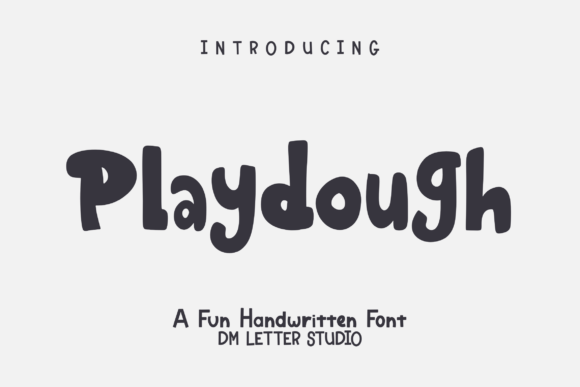
Finding the perfect balance between whimsy and professionalism is one of the most common challenges in creative design. When working on projects for children, family-oriented brands, or cheerful packaging, designers often face a difficult trade-off: choose a font that is undeniably fun but sacrifices legibility, or opt for something readable that feels sterile and corporate. Playdough solves this specific design dilemma by offering a chunky, squishy display font inspired by soft clay shapes and bouncy, kid-friendly lettering. It feels fun, bold, and cheerful, with rounded forms that instantly add personality to any design without compromising on clarity.
Because the letter shapes are thick and well-balanced, Playdough stays readable at any size, from small stickers to big headlines. This versatility makes it an essential tool for adults seeking practical solutions for kids' projects, playful branding, packaging, posters, stickers, apparel, and social media graphics. As a result, your designs feel friendly, bright, and full of joy, while still maintaining the structural integrity required for professional output.
Overcoming Common Typography Challenges in Playful Design
Designers and crafters frequently encounter technical hurdles when selecting novelty fonts. Many decorative typefaces suffer from inconsistent baselines, thin strokes that break during printing, or overly complex details that become muddy when scaled down. These issues can lead to wasted materials and frustrated clients. Playdough addresses these pain points directly through its intentional construction.
The primary goal for most users is to create approachable visuals that communicate warmth and safety. Whether you are designing a birthday invitation, a product label for organic snacks, or educational materials, the typography sets the emotional tone. Playdough provides that emotional connection through its soft, tactile aesthetic while ensuring the text remains functional. Unlike hand-drawn styles that can look messy, this font offers uniformity. The consistent weight and spacing mean that layouts come together fast because the letters are easy to arrange, reducing the time spent manually kerning or adjusting individual characters.
Technical Reliability Across Platforms and Mediums
For adult creators, ease of use is just as important as aesthetics. A beautiful font is useless if it causes software crashes or fails during production. First, Playdough installs easily and works smoothly in Canva, Photoshop, Illustrator, and most design apps. This cross-platform compatibility ensures that whether you are a professional graphic designer using Adobe Creative Cloud or a small business owner creating social media content in Canva, the experience remains seamless.
Beyond digital design, physical production demands specific typographic qualities. Next, the thick shapes cut and print cleanly for vinyl, stickers, laser projects, and screen printing. Thin serifs or intricate details often fail when cut on Cricut or Silhouette machines, leading to peeling vinyl or broken stencil bridges. The robust, rounded forms of Playdough eliminate these risks. The substantial stroke width ensures that adhesive vinyl adheres properly and that laser engraving produces crisp, defined edges rather than scorched, illegible marks. For screen printers, the bold geometry allows for easier mesh clearance and ink deposition, resulting in vibrant, opaque prints on textiles and paper.
Strategic Pairing and Layout Implementation
To maximize the impact of this display font, strategic pairing is essential. Moreover, Playdough pairs perfectly with simple sans fonts for clean balance, so finished designs look polished without extra work. Combining the expressive nature of Playdough with a neutral geometric sans-serif creates a hierarchy that guides the viewer’s eye. The display font captures attention and conveys emotion, while the supporting sans-serif delivers detailed information clearly. Therefore, it’s a strong choice for creators who want playful typography that converts viewers into customers or participants.
When implementing this font, start with short, punchy words and let the chunky shapes do the work. Long sentences can appear overwhelming in such a bold typeface. After that, add supporting text in a clean sans font for contrast. Because Playdough has soft, rounded forms, it works especially well in stacked layouts, bubbles, and badge-style designs. In addition, it shines when used inside containers or along curved paths, as the inherent bounce of the letterforms complements circular and organic compositions naturally.
Practical Applications for Different User Groups
Different creators have unique needs when utilizing playful typography. Understanding how to adapt Playdough to specific contexts ensures the best possible outcome.
- Educators and Teachers: Use Playdough for classroom signage, learning flashcards, and reward charts. The high x-height and distinct character shapes support early literacy by making letters easily distinguishable for young readers. The friendly tone also helps create a welcoming learning environment.
- Small Business Owners: Apply this font to product packaging, sale announcements, and logo variations. It signals approachability and transparency, which are crucial values for family-focused brands. Ensure you maintain sufficient whitespace around the bold letters to prevent visual clutter on shelves.
- Crafters and DIY Enthusiasts: Leverage the font’s thickness for weeding-friendly vinyl decals and iron-on transfers. The consistent stroke width means less frustration during the crafting process. It is ideal for personalizing tumblers, t-shirts, and nursery decor where durability and readability are paramount.
- Social Media Managers: Utilize Playdough for thumbnail text, story overlays, and carousel headers. On mobile screens, thin fonts often disappear against busy backgrounds. The bold weight of Playdough ensures your message stops the scroll and remains legible even on smaller devices.
Best Practices for Professional Results
While Playdough is designed to be user-friendly, adhering to a few best practices will elevate your work from amateur to professional. Always consider the negative space within and around the letters. Because the forms are chunky, they occupy significant visual real estate. Avoid placing them too close to other graphical elements; giving the type room to breathe enhances its bouncy, energetic quality.
Color selection also plays a vital role. While the font works beautifully in black and white, it truly comes alive with vibrant, saturated palettes. Consider using gradients or subtle textures within the letterforms to mimic the tactile inspiration of actual modeling clay. However, ensure that any texture applied does not reduce contrast to the point of illegibility. Accessibility should always remain a priority, even in playful design.
Finally, remember that consistency builds brand recognition. If you adopt Playdough as part of your visual identity, use it systematically across all touchpoints. Create templates for recurring assets like social posts or price tags to ensure the font size and placement remain standardized. This disciplined approach allows the inherent charm of the typeface to shine without becoming chaotic. By treating Playdough as a serious design tool rather than just a novelty, you unlock its full potential to create meaningful, joyful, and effective visual communication.