School Lovers: Integrating Friendly Typography into Educational Design Workflows
Selecting the right typeface is a strategic decision that influences how an audience receives information before they read a single word. In educational and youth-oriented design, this choice carries additional weight because it must balance legibility with emotional resonance. School Lovers serves as a specialized tool within this niche, offering a display font solution that bridges the gap between bold visibility and approachable warmth. For designers, educators, and content creators, understanding where this typeface fits into a broader production workflow ensures that aesthetic choices support functional communication goals rather than detracting from them.
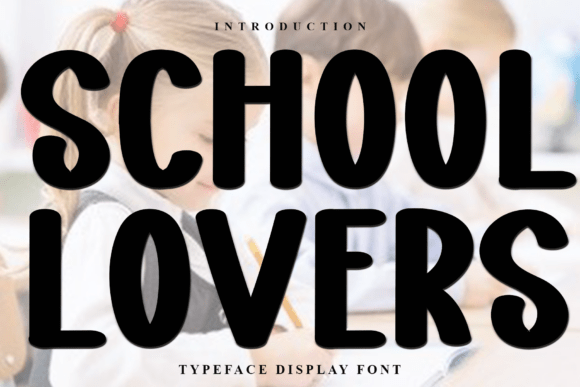
School Lovers is defined by its thick, rounded letterforms and soft, bubble-like aesthetic. Unlike standard sans-serif fonts that prioritize neutrality, this typeface is engineered to evoke a specific psychological response: safety, energy, and enthusiasm. Its chunky weight provides the necessary contrast for headers and titles, ensuring instant recognition even at a distance or on small screens. However, its true value lies in its smooth curves, which soften the visual impact of bold typography. This makes it particularly effective for projects targeting children, students, and parents who respond positively to non-threatening, inviting visual cues. Integrating this font requires treating it as a deliberate accent element within a larger typographic hierarchy.
Strategic Placement in the Creative Process
Incorporating School Lovers effectively begins during the planning and conceptualization phase of a project. Before opening design software, determine the specific emotional tone required for the deliverable. If the goal is to create classroom posters, elementary school branding, or children’s book covers, this font should be identified early as the primary display face. Establishing this direction upfront prevents wasted time testing incompatible typefaces later in the process. During the mood boarding stage, pair School Lovers with imagery and color palettes that share its organic, rounded qualities to ensure visual cohesion across all assets.
During the active design execution phase, treat School Lovers strictly as a headline or title font. Its heavy weight and distinctive character shapes make it unsuitable for body copy or extended reading passages. Attempting to use it for paragraphs will compromise readability and fatigue the reader. Instead, utilize it for high-impact touchpoints such as worksheet titles, event banners, social media graphics, and navigation buttons. This restraint preserves the font’s novelty and ensures it retains its power as a visual anchor. When designing multi-page documents or websites, establish clear style guides that dictate exactly when and where School Lovers appears to maintain consistency throughout the project.
Post-production review is equally critical when working with expressive display fonts. After laying out designs, test School Lovers in context rather than in isolation. Print physical proofs for classroom materials to verify that the ink spread does not close up the rounded counters at smaller sizes. For digital projects, check rendering across different browsers and devices to ensure the curves remain smooth and do not pixelate. Gather feedback from the target demographic or stakeholders to confirm that the intended friendly and energetic spirit translates effectively in the final application. This validation step confirms that the typographic choice successfully supports the educational or communicative objective.
Technical Integration and Pairing Strategies
School Lovers cannot function alone; it requires careful pairing with complementary typefaces to create a balanced layout. Because of its strong personality and substantial weight, it demands a neutral partner for body text. Clean geometric sans-serifs like Montserrat, Poppins, or Nunito work exceptionally well because their underlying structure echoes the modern feel of School Lovers without competing for attention. Alternatively, highly legible humanist sans-serifs provide excellent contrast while maintaining a warm undertone. Avoid pairing School Lovers with other decorative or script fonts, as this creates visual clutter and reduces overall comprehension. The supporting typeface should always recede visually to let the display font perform its role as the primary attention grabber.
Compatibility and file management are practical considerations for professional workflows. Ensure you have licensed the appropriate weights and styles needed for your specific use case before beginning production. While School Lovers is primarily a display font, having access to multiple weights allows for greater flexibility in creating hierarchical distinctions between main titles and subtitles. Organize font files systematically within your asset library to streamline collaboration with team members or external vendors. When sharing source files, include documentation noting that School Lovers is a display-only font to prevent misuse by junior designers or clients who may not understand typographic best practices.
Color interaction significantly affects how School Lovers performs in a layout. The thick strokes of this typeface provide ample surface area for color, making it ideal for vibrant, saturated hues commonly associated with youth and education. However, avoid using low-contrast color combinations that diminish legibility. Dark text on light backgrounds or bright text on dark backgrounds maintains the crisp edges necessary for the bubble-like aesthetic to read clearly. Consider using color strategically to reinforce meaning; for example, using green for "Go" or "Start" labels and orange for "Attention" headers leverages both the shape and color of the typeface to communicate dual messages instantly.
Practical Applications Across Educational Contexts
Educators and administrators can leverage School Lovers to transform routine communications into engaging experiences. Classroom signage benefits immensely from this typeface because it turns directional or instructional text into welcoming markers rather than sterile commands. Labels for learning centers, reading corners, and supply stations become more inviting when rendered in soft, rounded letters. For newsletters and parent communications, using School Lovers for section headers breaks up dense text and signals a positive, community-focused tone. This subtle shift in presentation can improve engagement rates and foster a stronger sense of connection between schools and families.
Content creators and marketers targeting family audiences find School Lovers invaluable for establishing brand voice. YouTube thumbnails, Instagram stories, and blog post featured images require immediate visual impact to stop scrolling users. The bold, friendly nature of this font communicates content relevance faster than photography alone. When creating downloadable resources like coloring pages, activity sheets, or educational printables, School Lovers adds perceived value and professionalism to free or paid products. Consistent use of this typeface across platforms builds recognizable brand equity that signals quality and age-appropriateness to parents and educators browsing crowded marketplaces.
Small business owners in the children’s product space can integrate School Lovers into packaging and point-of-sale materials to enhance shelf appeal. Product labels, hang tags, and shopping bags benefit from typography that feels handmade yet polished. The font’s chunky weight ensures readability in retail environments where quick decisions are made. For service-based businesses like tutoring centers, daycare facilities, or after-school programs, website headers and brochure covers set expectations before potential clients engage further. Using School Lovers consistently across these touchpoints creates a cohesive brand experience that reinforces trust and approachability.
Quality Control and Long-Term Usability
Maintaining typographic quality over time requires establishing clear usage guidelines. Create a simple reference document that specifies approved sizes, colors, and spacing parameters for School Lovers within your organization or personal workflow. Define minimum size thresholds to prevent detail loss in print or screen reproduction. Document prohibited uses explicitly to prevent scope creep where the font gradually infiltrates body copy or inappropriate contexts. These guardrails preserve the font’s effectiveness and prevent design degradation as projects evolve or team members change.
Efficiency in production comes from building reusable templates featuring School Lovers. Master slides for presentations, preset styles in design software, and CSS classes for web development reduce repetitive setup time. Pre-configured text styles with correct tracking, leading, and color values ensure consistency across hundreds of assets without manual adjustment. Template libraries also serve as training tools for new team members, demonstrating proper implementation through example rather than abstract rules. Investing time in systematic template creation pays dividends in faster turnaround times and reduced error rates during busy periods like back-to-school seasons or product launches.
Evaluate the long-term viability of School Lovers within your design system periodically. Trends in educational design shift, and what feels fresh today may feel dated in several years. Monitor audience feedback and engagement metrics to assess whether the typeface continues to resonate with your target demographic. Stay informed about updates to the font family that might offer improved language support, additional weights, or variable font capabilities. Maintaining awareness of the typeface’s evolution ensures your design system remains current and functional. When the time comes to refresh your visual identity, consider whether School Lovers still aligns with your strategic goals or if a transition plan is necessary.
Ultimately, School Lovers succeeds when treated as a purposeful instrument within a thoughtful design process. Its charm and energy are assets only when deployed with intention and restraint. By understanding its technical characteristics, pairing requirements, and contextual applications, professionals can harness its potential to create educational materials that genuinely ignite passion for learning. The font becomes more than decorative lettering; it transforms into a reliable component of effective communication strategy that serves both creators and learners alike. Successful integration depends not on the font itself, but on the discipline and foresight of those who wield it.