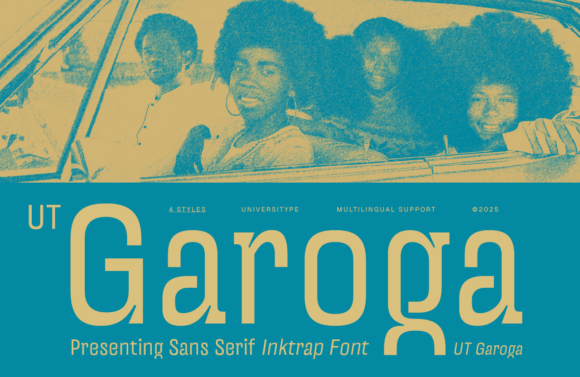
UT Garoga: Retro-Chic Sans Serif with Ink Traps
Experience the joy of typeface design with UT Garoga, a font that successfully bridges the gap between nostalgic warmth and modern structural reliability. For designers and brand strategists seeking a visual voice that feels both established and approachable, this retro-chic sans serif offers a distinct solution. It brims with the intriguing charm of an ink-trap character, yet it avoids the common pitfalls of vintage revival fonts that often lean too heavily into kitsch. Instead, UT Garoga exudes a solid confidence without being stiff, making it a practical tool for contemporary communication needs.
The typeface boasts a well-crafted structure that serves as a reliable foundation for varied design projects. Its defining features—rounded corners, amplified ink traps, and gentle terminals—combine to create an amiable demeanor. However, beneath this softness lies a robust architecture that guarantees consistency across different media. When you use UT Garoga, you are not just selecting a decorative element; you are adopting a system designed to maintain legibility and personality simultaneously. This balance is particularly valuable for professionals who need their typography to work as hard as their copy.
Leveraging Ink Traps for Visual Hierarchy and Tone
Ink traps were originally functional necessities in printing, designed to prevent ink from filling in sharp corners on newsprint. In UT Garoga, these features have been amplified and repurposed as aesthetic assets. The playful ink-trap details contribute to a robust visual identity by creating unique negative space within the letterforms. This is not merely stylistic; it serves a functional purpose in digital and print layouts by increasing character recognition and adding texture to large blocks of text.
To unleash the full potential of these unique details, designers should utilize UT Garoga at larger display sizes. At smaller sizes, the font remains clean and legible, but as the point size increases, the ink traps and rounded terminals begin to space out and catch the viewer's attention. This makes the typeface exceptionally effective for headlines, hero images, and signage where immediate impact is required. The transition from functional legibility at small sizes to expressive character at large sizes allows for a cohesive design system that uses a single type family for multiple hierarchical levels.
Practical Applications in Brand Identity
Brand designers curating expressive visual identities will find UT Garoga to be an ideal pick because it carries inherent emotional weight. The rounded corners and gentle terminals soften the message, making brands appear more accessible and human-centric. This is crucial for industries like wellness, education, and community services where trust and approachability are paramount. Yet, the underlying geometric structure prevents the brand from appearing unprofessional or childish. It strikes a precise middle ground, allowing businesses to communicate friendliness while maintaining corporate credibility.
For creative studios hunting for typefaces with character, UT Garoga provides a distinctive alternative to ubiquitous neo-grotesque sans serifs. It adds a layer of sophistication and history to a layout without requiring additional graphic embellishments. The font does the heavy lifting, reducing the need for excessive decoration and streamlining the design process. This efficiency supports faster iteration cycles during branding workshops, as the typeface itself establishes a strong mood board foundation.
Editorial and Packaging Use Cases
Editorial designers eyeing opportunities to flex their skills with bold headlines will appreciate the font’s versatility. In magazine spreads, web articles, or annual reports, UT Garoga creates a rhythmic reading experience. The oblique styles add dynamic movement for pull quotes and captions, while the regular weights anchor body copy. The consistent x-height and open counters ensure that even dense editorial content remains inviting to read, addressing the common challenge of balancing style with long-form readability.
Packaging designers catering to lifestyle products, edibles, and vintage-rich goods face specific constraints regarding shelf presence and regulatory compliance. UT Garoga fits this niche effectively. The retro association triggers nostalgia, which is a powerful driver in consumer packaging for food, beverage, and artisanal goods. However, because the design avoids falling into pastiche, it ensures the product looks current rather than dated. The robust structure also means the typeface reproduces well on various substrates, from textured paper to glossy plastic, maintaining its integrity even when scaled down for ingredient lists or nutritional panels.
Navigating the Four Available Styles
Versatility is key to return on investment in typography licensing. UT Garoga includes four exciting styles: Regular, Rounded, Oblique, and Rounded Oblique. Understanding when to deploy each style maximizes the font's utility.
- Regular: The workhorse style. Best used for primary headlines, navigation menus, and situations requiring maximum neutrality with a hint of warmth. It anchors the design system.
- Rounded: Amplifies the amiable demeanor. Ideal for call-to-action buttons, friendly notifications, children’s products, or any context where reducing cognitive friction is the goal. Use sparingly to maintain impact.
- Oblique: Provides emphasis without the formality of a true italic. Excellent for highlighting keywords in body text, secondary headlines, or adding forward momentum to static layouts.
- Rounded Oblique: A specialized combination offering maximum softness and motion. Perfect for signatures, personal notes within a design, or accentuating playful elements in a campaign.
Having these four distinct voices within one family simplifies decision-making. Designers can create complex hierarchies and tonal shifts without introducing conflicting typefaces, ensuring visual harmony across touchpoints.
Considerations for Effective Implementation
While UT Garoga is a powerful tool, understanding its limitations ensures better outcomes. Because of its pronounced ink traps and rounded terminals, it may not be the optimal choice for environments demanding severe austerity or high-tech precision. If a project requires a sterile, clinical, or ultra-modern futuristic aesthetic, the inherent warmth of UT Garoga could create tonal dissonance. In such cases, comparing options against stricter geometric sans serifs is advisable.
Additionally, the amplified ink traps require mindful spacing adjustments at extreme sizes. While the font is designed to space out beautifully at display sizes, tight tracking at very large scales might cause the ink traps to visually merge or create awkward negative shapes. Testing in the final output medium is essential. What looks balanced on a high-resolution monitor may need optical adjustment for low-resolution screens or specific print techniques.
Accessibility should also remain a priority. While the rounded forms are friendly, ensure that contrast ratios meet WCAG standards, especially when using the lighter weights or oblique styles against colored backgrounds. The unique character shapes generally aid distinguishability, but user testing with diverse audiences confirms legibility in real-world scenarios.
Strengthening Communication Through Typography
Ultimately, the value of UT Garoga lies in its ability to strengthen communication through nuanced visual cues. Typography is rarely neutral; it frames how content is received. By choosing a typeface that balances retro charm with modern robustness, designers signal respect for tradition while embracing contemporary clarity. This duality resonates with adult audiences aged 20–50 who navigate both digital and physical spaces and appreciate design that feels curated rather than generic.
For freelancers and small business owners, UT Garoga offers a way to achieve agency-level polish without extensive custom lettering budgets. For educators and publishers, it provides a readable yet engaging alternative to standard textbook fonts. For marketers, it delivers a memorable visual hook that supports brand recall. The font’s architecture supports these goals not through novelty alone, but through thoughtful construction that prioritizes the reader’s experience. When selected intentionally, UT Garoga transforms from a mere collection of glyphs into a strategic asset that enhances presentation, simplifies design workflows, and connects authentically with the intended audience.