Why Poffy Represents the Shift Toward Human-Centric Typography in Modern Branding
In an era dominated by algorithmic feeds and AI-generated content, the visual language of branding is undergoing a significant correction. For years, digital design leaned heavily into sterile minimalism and geometric perfection, prioritizing scalability over soul. However, as markets saturate and consumer attention fragments, professionals are seeking typefaces that offer more than just legibility; they are looking for personality. This is where Poffy enters the conversation, not merely as a display font, but as a strategic response to the growing demand for warmth, authenticity, and tactile engagement in digital spaces.
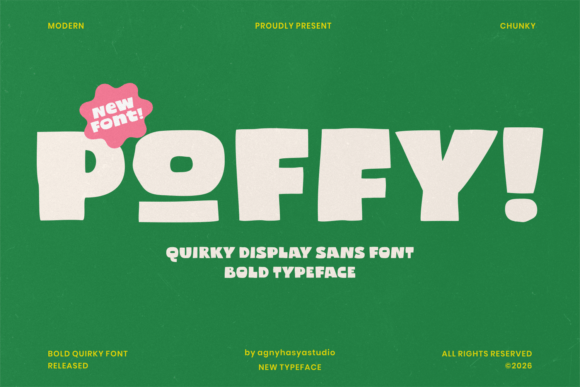
Poffy is a chunky, quirky display sans-serif that defies the rigid grid systems of traditional corporate identity. With bold shapes and a playful character, it brings a necessary sense of fun and approachability to contemporary design. Inspired by retro-modern aesthetics and friendly imperfections, Poffy feels confident without being loud and bold without being harsh. For marketers, entrepreneurs, and creatives, understanding why this specific typographic style is gaining traction offers insight into broader shifts in consumer psychology and visual communication.
The Return of Tactility in Digital Design
The current design landscape is reacting against the "flat design" era that defined the 2010s. While clean lines and uniform spacing served functional purposes for early mobile interfaces, they often stripped brands of their unique voice. Today’s audiences, particularly Gen Z and Millennials, gravitate toward visuals that feel handmade, imperfect, and distinctly human. Poffy capitalizes on this trend through its construction. Every letter is crafted with soft curves and slightly irregular proportions, creating a lively rhythm that mimics hand-lettering rather than machine generation.
This shift is not purely aesthetic; it is deeply psychological. In a marketplace where trust is at a premium, typography that exhibits "friendly imperfections" signals authenticity. When a coffee shop, creative agency, or lifestyle brand utilizes Poffy in their signage or packaging, they are subconsciously communicating accessibility. The font’s chunky weight provides the authority needed for headlines, while its quirky details prevent that authority from feeling intimidating. It strikes a delicate balance that many modern brands struggle to achieve: standing out through distinctiveness while remaining welcoming enough to invite engagement.
Strategic Versatility Across Touchpoints
For professionals managing omnichannel brand experiences, versatility is non-negotiable. A typeface must perform equally well on a massive storefront sign and a compact Instagram story. Poffy has been engineered to shine across these diverse applications, making it a practical choice for comprehensive branding projects. Its bold forms ensure readability at smaller sizes in social media graphics, while its expressive character allows it to serve as the primary visual hook in posters and editorial layouts.
Consider the evolving needs of the food and beverage industry or the creator economy. These sectors rely heavily on visual storytelling that feels personal and energetic. Whether designing for artisanal coffee shops, playful editorials, or modern illustrations, Poffy helps messages feel cheerful and memorable. Unlike rigid geometric sans-serifs that can feel clinical in these contexts, Poffy adds a layer of emotional resonance. It transforms a simple announcement into an invitation, turning passive viewers into active participants in the brand narrative.
Bridging Retro Nostalgia and Modern Utility
Nostalgia remains a powerful marketing tool, but successful retro revival requires adaptation rather than replication. Poffy embodies a retro-modern aesthetic that references the optimism of mid-century advertising and 70s pop culture without feeling dated. It captures the spirit of those eras—the confidence, the curvature, the joy—but executes it with contemporary precision. This makes it relevant for heritage brands looking to refresh their image as well as new startups aiming to establish instant familiarity.
This duality is crucial for forward-looking businesses. Consumers want the comfort of the familiar combined with the freshness of the new. Poffy satisfies both cravings. It avoids the pastiche of pure vintage fonts while rejecting the coldness of futuristic tech typography. For designers, this means less time trying to force a square peg into a round hole; the font already inhabits the cultural sweet spot where tradition meets innovation.
Workflow Efficiency and Creative Freedom
Beyond its visual impact, Poffy addresses practical changes in professional workflows. Creators today operate under tight deadlines and across multiple platforms. They need assets that are flexible and easy to implement without requiring advanced technical workarounds. Poffy includes alternates and ligatures that provide the flexibility to create unique typographic expressions while maintaining a consistent playful tone. This built-in variety allows designers to customize headlines and logos without breaking the visual system or resorting to external illustration tools.
Furthermore, accessibility in design software has become a standard expectation. Not every entrepreneur or marketer has access to high-end vector software or extensive typographic training. Poffy features PUA encoding, which allows users to access all alternates and flourishes with ease directly from standard character maps or basic text editors. No specialized design tools are required to unlock the font's full potential. This democratization of high-quality typography empowers freelancers and small business owners to produce professional-grade visuals independently, streamlining the path from concept to execution.
The Emotional Economics of Typeface Selection
Ultimately, the decision to use Poffy is a business decision rooted in emotional economics. Typography is often undervalued as a mere container for text, but in reality, it sets the emotional temperature of the entire user experience. In a crowded digital ecosystem, "safe" choices often become invisible. Brands that win attention are those that dare to express a distinct mood.
Poffy is not just a font; it is a mood. It serves as a shorthand for values like creativity, friendliness, and human connection. When a brand adopts this typeface, they are aligning themselves with a cultural moment that prioritizes well-being and joy over efficiency and austerity. This alignment resonates with consumers who are increasingly making purchasing decisions based on how a brand makes them feel rather than just what it sells.
Practical Applications for Maximum Impact
To leverage Poffy effectively, professionals should consider where emotional impact yields the highest return. The following areas represent prime opportunities for integration:
- Packaging Design: Use Poffy for product names and key benefits to create shelf appeal that feels artisanal and trustworthy amidst a sea of generic competitors.
- Social Media Templates: Utilize the font’s alternates to create dynamic quote cards and announcements that maintain brand consistency while avoiding visual fatigue in repetitive posting schedules.
- Event Signage and Wayfinding: Deploy the chunky weights for directional signage to ensure clarity while reinforcing the event’s welcoming atmosphere.
- Editorial Headlines: Pair Poffy with a clean body serif to create a contrast that guides readers through long-form content with a sense of rhythm and enjoyment.
- Merchandise and Apparel: Leverage the font’s inherent playfulness to create wearables that fans actually want to own, extending brand reach beyond digital touchpoints.
Future-Proofing Through Personality
As we look toward the future of visual communication, the role of distinctive typography will only grow. With generative AI capable of producing endless streams of polished, average imagery, human-crafted nuance becomes a premium differentiator. Fonts like Poffy that celebrate irregularity and expression act as anchors of authenticity in a synthetic sea.
Professionals who integrate such typefaces are not merely following a trend; they are adapting to a fundamental change in how value is perceived. The market is moving away from perfection and toward connection. By choosing tools that facilitate this connection, designers and marketers position their brands to thrive in an environment where personality is the ultimate competitive advantage. Poffy offers a tangible way to embody this shift, providing the visual vocabulary needed to speak to a generation that craves warmth, fun, and genuine human expression in every interaction.
Incorporating Poffy into your design arsenal is an acknowledgment that business is ultimately about people. It is a recognition that even in the most professional contexts, there is room for joy, and that sometimes, the most effective way to communicate serious value is through a lens of confident playfulness. As workflows evolve and consumer expectations continue to prioritize emotional resonance, having a typeface that naturally bridges the gap between bold impact and friendly approachability is not just a stylistic preference—it is a strategic necessity.