Helper Font: Bold, Hand-Drawn Display Typography
Selecting the right typeface for a creative project often involves balancing two competing needs: visual impact and professional polish. You want something that grabs attention immediately, yet you also need it to feel intentional rather than chaotic. Helper addresses this specific design challenge by combining a massive, hand-drawn silhouette with structured, consistent proportions. This display font offers a unique solution for designers, marketers, and content creators who need to convey energy and approachability without sacrificing legibility or brand authority.
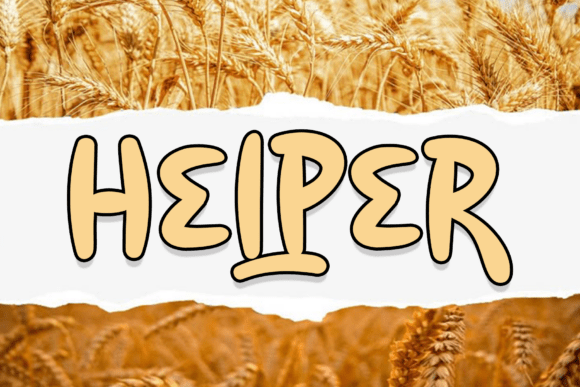
Helper is defined by its heavy character proportions and thick, consistent strokes. Unlike many novelty fonts that sacrifice readability for style, this typeface maintains soft, rounded terminals that keep the tone friendly and accessible. The inclusion of a subtle drop-shadow effect and a thin black outline creates a layered visual presence directly within the glyph itself. This built-in depth eliminates the need for complex layering in design software, streamlining the workflow for social media graphics, packaging, and youth-oriented branding where speed and consistency are paramount.
Streamlining High-Impact Visual Communication
One of the most practical benefits of using Helper is the reduction of production time for high-visibility assets. In traditional graphic design workflows, achieving a "sticker" or "pop-art" aesthetic often requires manually applying strokes, shadows, and extrusion effects to standard text. These effects can be difficult to edit later; if the copy changes, the designer must reapply every effect to ensure alignment. Helper solves this inefficiency by baking these stylistic elements into the font file itself.
For social media managers and digital marketers creating daily content, this distinction matters significantly. When designing Instagram stories, YouTube thumbnails, or TikTok covers, the ability to simply type and have the text appear fully styled allows for rapid iteration. You can test multiple headlines in seconds rather than minutes. The consistent stroke weight ensures that even when resizing text for different platform dimensions, the visual hierarchy remains intact. This efficiency supports a more agile content strategy, allowing teams to respond to trends quickly while maintaining a cohesive visual identity.
Elevating Youth Branding and Product Packaging
The demographic targeting of Gen Z and younger Millennials requires a nuanced typographic approach. This audience tends to reject overly corporate or sterile aesthetics, favoring designs that feel authentic, tactile, and human. However, brands still need to communicate trust and quality. Helper bridges this gap through its energetic, hand-drawn silhouette that retains professional organization. The thick strokes suggest confidence and stability, while the rounded terminals and playful proportions signal creativity and openness.
In product packaging, specifically for snacks, beverages, toys, or lifestyle accessories, shelf presence is determined by split-second recognition. Helper’s massive scale ensures readability from a distance, which is critical in retail environments. The built-in outline provides necessary contrast against busy background photography or colored packaging materials. For example, a craft soda brand might use Helper for the flavor name on the can; the font’s inherent shadow creates separation from the metallic surface, ensuring the text pops regardless of lighting conditions. This makes the product photograph better for e-commerce listings, where thumbnail clarity drives click-through rates.
Enhancing Readability in Cheerful Marketing Headers
A common pitfall with "fun" display fonts is poor legibility at smaller sizes or in longer phrases. Many hand-lettered styles have erratic baselines or inconsistent widths that make them difficult to parse quickly. Helper avoids this by adhering to strict typographic grids despite its organic appearance. The character proportions are heavy but uniform, creating a solid color block when set as a headline. This predictability allows designers to use the font confidently in marketing headers for websites, email newsletters, and event signage.
Consider an educational platform or a summer camp registration page. The goal is to generate excitement while clearly communicating essential information. Using a messy script might convey fun but obscure the message, leading to user frustration. Helper delivers the emotional tone of enthusiasm through its shape and weight, while its structural clarity ensures the user instantly understands the offer. The soft terminals reduce visual aggression, making bold statements feel welcoming rather than shouting. This psychological balance is essential for conversion-focused design where the mood must support, not distract from, the call to action.
Practical Considerations for Professional Implementation
While Helper is a versatile asset, understanding its limitations ensures it is used effectively. As a display font with significant decorative details, it is not suitable for body copy or extended reading passages. The thick strokes and internal shadows will cause eye fatigue if used for paragraphs. It performs best at large point sizes, typically above 48pt for digital and 36pt for print, where the intricate details of the outline and shadow remain crisp.
Designers should also consider pairing strategies. Because Helper carries so much visual weight, it demands a supporting typeface that provides breathing room. A clean, neutral sans-serif like Inter, Helvetica, or DM Sans works exceptionally well to ground the composition. Avoid pairing Helper with other decorative or serif fonts, as this creates visual competition and clutter. The goal is to let Helper serve as the singular focal point of the layout.
Color selection also plays a vital role in maximizing the font's utility. Since the font includes a black outline and shadow, using dark fill colors can sometimes reduce the perceived contrast of the internal details. Bright, saturated colors or white fills tend to showcase the dimensional effects most effectively. If your brand guidelines require dark text, test the rendering carefully to ensure the shadow doesn't merge with the letterform, which could muddy the silhouette.
Who Benefits Most From This Typeface
Helper is particularly valuable for professionals who operate at the intersection of creativity and commerce. Freelance designers working with small business clients will find it useful for delivering high-value branding packages quickly. The font’s distinct personality can define a brand’s voice without requiring custom lettering commissions, making premium design accessible to smaller budgets.
Educators and non-profit organizers also benefit from Helper’s approachable nature. Creating materials for fundraising events, school fairs, or community workshops often requires a tone that is serious about the cause but celebratory in spirit. This typeface conveys that duality effectively. Similarly, e-commerce sellers and Etsy shop owners can use Helper to create listing images and banner ads that stand out in crowded marketplaces. The hand-drawn aesthetic aligns well with artisanal and handmade products, reinforcing the value proposition through typography alone.
Ultimately, Helper serves as a functional tool for visual problem solving. It removes the technical friction associated with stylized text, allowing creators to focus on messaging and layout. Whether you are launching a new energy drink, redesigning a blog header, or creating merchandise for a podcast, this font provides a reliable foundation for bold, cheerful communication. By integrating such a specialized asset into your toolkit, you gain the ability to produce distinctive, professional-grade visuals that resonate with modern audiences while respecting the practical constraints of production timelines and brand consistency.