Animal Christmas: Understanding the Bold, Hand-Drawn Font for Festive Design
Typography is the silent ambassador of design. In the realm of seasonal branding and creative projects, the typeface you choose communicates emotion before a single word is read. Among the myriad of holiday-themed fonts available to designers and creators today, Animal Christmas has emerged as a distinctive choice that bridges the gap between bold authority and playful warmth. Unlike traditional serif fonts that evoke Victorian nostalgia or delicate scripts that suggest formal elegance, Animal Christmas offers a new style characterized by massive letterforms and a unique hand-drawn silhouette.
For general readers, educators, small business owners, and graphic designers, understanding the specific attributes of this font is essential for effective visual communication. This article explores the anatomy, psychological impact, and practical applications of Animal Christmas, explaining why this bold display font has become a staple for festive branding, children’s literature, and artisanal packaging.
The Anatomy of a Unique Display Font
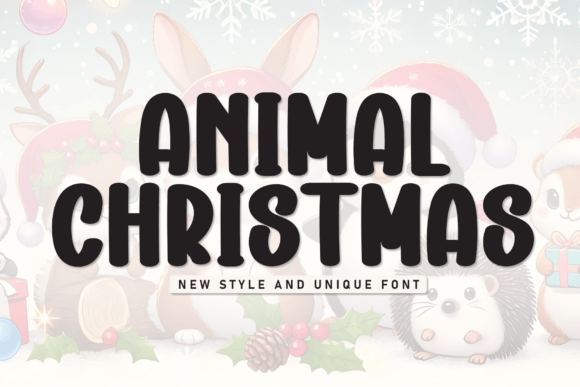
To appreciate why Animal Christmas works so effectively, one must first understand its construction. It is categorized as a display font, meaning it is engineered specifically for large-scale usage such as headlines, posters, and logos rather than body text. However, what sets it apart from standard display typefaces is its specific combination of geometric precision and organic imperfection.
Hand-Drawn Silhouettes with Geometric Roots
The primary identifier of Animal Christmas is its clean, unique hand-drawn silhouette. While many "handwritten" fonts suffer from inconsistent spacing or illegibility at smaller sizes, this typeface maintains a rigorous structural integrity. The letterforms are massive and characterized by thick, consistent strokes. This consistency provides an authoritative presence; the font does not waver or fade. Yet, despite this boldness, the edges are softened with rounded terminals. These soft curves prevent the heavy weight of the letters from feeling aggressive or industrial, ensuring the visual tone remains approachable and warm.
The Bouncy Baseline Effect
Perhaps the most defining feature of Animal Christmas is its slightly bouncy baseline. In traditional typography, letters sit on a perfectly straight horizontal line. In Animal Christmas, the characters gently undulate along the baseline. This subtle vertical movement creates a sense of joyful rhythm and kinetic energy. For the viewer, this mimics the natural cadence of excitement or the gait of a happy animal, reinforcing the thematic name without relying on literal clip-art illustrations within the glyphs themselves. It is a masterclass in conveying emotion through pure form.
Psychological Impact and Seasonal Branding
In marketing and design psychology, font selection is never arbitrary. The shapes we see trigger associative memories and emotional responses. Animal Christmas leverages several psychological principles that make it exceptionally suited for the holiday season.
- Bouba/Kiki Effect: Design psychology suggests that humans associate rounded shapes with softness, safety, and friendliness (Bouba), while sharp angles are associated with danger or alertness (Kiki). By utilizing soft, rounded terminals alongside thick strokes, Animal Christmas hits the perfect sweet spot of being noticeable yet safe.
- Visual Warmth: The thickness of the stroke weight correlates to perceived volume and substance. Thin lines can feel fragile or exclusive, whereas the massive letterforms of this font feel inclusive and generous—key attributes for holiday messaging.
- Nostalgia Meets Modernity: The hand-drawn quality evokes the nostalgia of handmade crafts and personal greeting cards, while the clean geometry ensures it looks contemporary on digital screens.
This combination makes the font a powerful tool for businesses trying to stand out in a saturated holiday market. It avoids the cliché of overly ornate Victorian scripts, offering instead a fresh, modern aesthetic that still feels deeply connected to the spirit of giving and celebration.
Practical Applications Across Industries
Understanding the theory behind Animal Christmas is only half the equation; knowing where and how to apply it is where value is created. Because of its versatile nature, this font transcends simple holiday cards and finds utility in various professional and creative sectors.
Children’s Book Titles and Educational Materials
One of the strongest use cases for Animal Christmas is in publishing for young audiences. Children respond positively to high-contrast, rounded shapes that are easy to decode. The bouncy baseline adds an element of playfulness that keeps young readers engaged, while the bold strokes ensure legibility even for early readers. Educators and self-publishers find this font ideal for cover titles, chapter headers, and educational flashcards because it balances fun with clarity. It signals to both the child and the parent that the content inside is safe, entertaining, and age-appropriate.
Artisanal Gift Packaging and Product Labels
In the world of e-commerce and retail, unboxing is part of the product experience. Artisanal brands, particularly those selling handmade goods, baked treats, or eco-friendly products, benefit immensely from this typeface. The hand-drawn silhouette reinforces the "human touch" of the brand, distinguishing it from mass-produced competitors. When used on gift tags, box sleeves, or product labels, Animal Christmas communicates premium craftsmanship without feeling stuffy. Its minimalist character allows it to pair beautifully with textured papers, twine, and natural materials commonly used in sustainable packaging.
Cheerful Marketing Headers and Social Media
Digital marketing requires immediate visual impact. On platforms like Instagram, Pinterest, or TikTok, users scroll quickly. The massive letterforms of Animal Christmas act as a visual stop-sign, arresting attention instantly. Because the font is labeled as a new style, it helps brands avoid looking dated. Marketing teams can utilize this font for sale announcements, event invitations, and seasonal campaign headers. The key advantage here is versatility; it reads well on mobile devices where intricate script fonts often become illegible blobs.
Best Practices for Implementation
While Animal Christmas is a robust and forgiving font, maximizing its potential requires adherence to certain design best practices. Beginners and experienced designers alike should consider the following guidelines to maintain the font's integrity.
- Respect the Hierarchy: As a display font, Animal Christmas is designed for headlines. Avoid using it for long paragraphs or body copy. The bouncy baseline and heavy weight will cause eye fatigue if used for extended reading. Pair it with a clean sans-serif or a simple slab serif for supporting text.
- Mind the Spacing: Due to the unique silhouette and bouncy baseline, tight tracking (letter spacing) can sometimes cause characters to collide awkwardly. Give the letters room to breathe. Slightly increased tracking often enhances the playful, airy feel of the composition.
- Color Considerations: The thick strokes of this font hold color beautifully. It is an excellent candidate for gradients, textures, or multi-colored treatments. However, ensure sufficient contrast against the background. White text on a dark green or red background maximizes the festive authority of the typeface.
- Avoid Over-Decoration: The font itself is decorative. Adding drop shadows, outlines, or excessive embellishments can clutter the clean silhouette. Trust the strength of the original design; its minimalism is its superpower.
Clarifying Common Misunderstandings
When selecting a font named "Animal Christmas," some users mistakenly assume the font contains literal pictograms of animals or that it is strictly limited to December usage. It is important to clarify these assumptions.
First, Animal Christmas refers to the stylistic qualities—the organic, creature-like bounce and the wild, hand-drawn energy—not necessarily embedded vector art. It is a typographic solution, not an illustration pack. Second, while optimized for the holidays, its warm, approachable geometry makes it suitable for year-round use in contexts requiring joy and informality, such as birthday parties, baby showers, or pet-related branding. Limiting it solely to Christmas underutilizes its expressive range.
Conclusion
Animal Christmas represents a significant evolution in festive typography. By combining the authority of bold, massive letterforms with the empathy of hand-drawn silhouettes and bouncy baselines, it solves a common design problem: how to be loud without being aggressive, and festive without being cliché. Whether you are designing a children’s book, packaging artisanal gifts, or crafting a social media campaign, this font offers a unique visual voice that resonates with modern audiences.
Ultimately, good design is about communication. Animal Christmas communicates joy, warmth, and authenticity through its very structure. By understanding its anatomical features and psychological triggers, creators can leverage this exceptional typeface to build stronger emotional connections with their audience, ensuring their seasonal messages are not just seen, but felt.