Evaluating Notes: A Practical Typeface for Creative Design
In the crowded landscape of digital typography, finding a typeface that balances aesthetic distinctiveness with functional reliability is a persistent challenge for designers and content creators. Notes emerges as a noteworthy contender in this space, offering a soft, unique touch that differentiates it from standard sans-serif or script options. While many decorative fonts sacrifice readability for style, Notes attempts to bridge the gap between artistic expression and practical utility. For professionals ranging from freelance graphic designers to small business owners managing their own branding, understanding the specific capabilities and limitations of this font is essential before integrating it into a production workflow.
This evaluation examines Notes not merely as an artistic asset, but as a functional tool within the design ecosystem. We will explore its technical compatibility, visual characteristics, and appropriate use cases to determine where it delivers genuine value and where alternative solutions might be more effective. The goal is to provide a grounded perspective on how this typeface performs in real-world projects, from digital marketing assets to physical craft products.
Visual Characteristics and Design Integrity
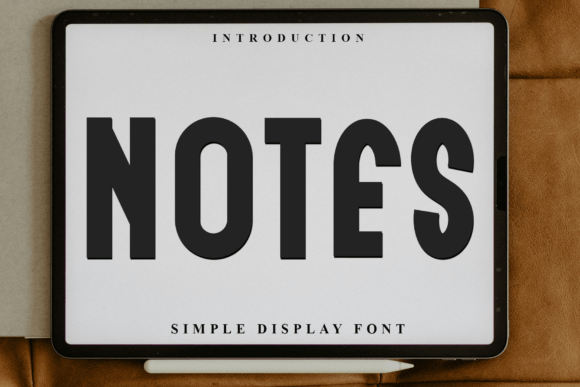
The primary appeal of Notes lies in its distinctive stroke work. Unlike geometric fonts that rely on mathematical precision, Notes utilizes organic curves and varied line weights to create a sense of warmth and approachability. This "soft touch" is not just a stylistic descriptor; it serves a psychological function in design. Typography carries emotional weight, and the rounded, natural forms of Notes tend to lower cognitive friction for readers, making content feel more personal and less corporate.
However, aesthetic appeal must be weighed against legibility. In professional testing, Notes maintains sufficient contrast and character distinction to remain readable at medium sizes, which is critical for subheadings, pull quotes, and short-form body copy. The letterforms possess enough individuality to stand out in a social media feed or product packaging, yet they retain enough structural familiarity to prevent decoding issues for the audience. This balance is what gives the font its versatility. It avoids the extreme stylization that often renders decorative fonts unusable for anything other than large-format headlines.
One notable strength is the consistency of the glyph set. When evaluating fonts for commercial work, inconsistent spacing or mismatched weights can derail a project during the refinement phase. Notes demonstrates a cohesive design language across its character set, suggesting a thoughtful development process. This reliability reduces the time designers spend manually kerning or adjusting baselines, thereby improving overall workflow efficiency.
Technical Compatibility and Workflow Integration
A beautiful font is useless if it cannot be deployed across the necessary platforms. Notes distinguishes itself through broad compatibility, specifically supporting both Windows environments and open-source platforms. For agencies and freelancers who collaborate with clients using diverse tech stacks, this flexibility is a significant operational advantage. It mitigates the risk of missing font errors when sharing source files or moving between proprietary software like Adobe Creative Cloud and open-source alternatives such as GIMP, Inkscape, or Scribus.
The inclusion of various characters further enhances its utility in global or multi-format projects. While no single font can cover every linguistic need, a robust character set ensures that punctuation, numerals, and special symbols match the core alphabet’s style. This is particularly relevant for e-commerce listings, educational materials, or international marketing campaigns where consistent typographic voice matters. Designers should always verify specific language support against their project requirements, but the foundational coverage provided by Notes supports a wide array of standard Western European applications.
From a file management perspective, the font integrates smoothly into standard font managers and operating system registries. There are no reported conflicts with common rendering engines, meaning what you see in the design mockup is likely what will appear in the final export, whether that is a rasterized web graphic or a vector-based print file. This predictability is a key metric of quality for any professional creative asset.
Strategic Applications and Audience Fit
Determining whether Notes fits your specific needs requires aligning its attributes with your project goals. Based on its visual profile and technical specs, this typeface is particularly well-suited for several key demographics and industries:
- Lifestyle and Wellness Brands: The soft, natural strokes align perfectly with industries focused on self-care, organic products, yoga, and mental health. The font communicates gentleness and authenticity without appearing unprofessional.
- Educators and Content Creators: For worksheets, presentation slides, and blog headers, Notes offers a friendly tone that engages learners and readers. It breaks up the monotony of standard academic or corporate typography while maintaining clarity.
- Craft and DIY Entrepreneurs: Makers selling on platforms like Etsy or creating Cricut/Silhouette designs benefit from the font’s handcrafted aesthetic. It mimics the look of custom lettering without requiring hours of manual illustration.
- Boutique Retail and Packaging: Small businesses looking to elevate their unboxing experience or shelf presence can use Notes for labels, thank-you cards, and tags. Its distinctive character helps build brand recognition in saturated markets.
Conversely, there are scenarios where Notes may not be the optimal choice. For dense, long-form text such as legal contracts, technical manuals, or extensive financial reports, a traditional serif or neutral sans-serif remains superior due to optimized reading ergonomics. Similarly, ultra-modern tech brands or luxury fashion houses seeking sharp, high-contrast minimalism may find the softness of Notes contradictory to their brand identity. Understanding these boundaries prevents misuse and ensures the font is applied where it can genuinely enhance communication rather than detract from it.
Assessing Long-Term Value and Versatility
When investing time in learning and implementing a new typeface, professionals must consider longevity. Trend-driven fonts often have a shelf life of six months before they begin to date a design. Notes, by virtue of its "natural" styling, leans toward timelessness rather than trendiness. Organic shapes and humanist proportions have remained relevant across decades of design history because they mirror natural handwriting and classical calligraphy. This suggests that projects created with Notes today are less likely to require expensive redesigns in the near future.
Versatility also extends to pairing potential. Notes functions effectively as a display face paired with clean, structured body fonts like Inter, Roboto, or Open Sans. The contrast between the expressive header and the utilitarian body text creates a clear visual hierarchy, guiding the viewer’s eye and improving information architecture. This interoperability makes it a valuable addition to a designer’s toolkit, as it can serve multiple roles across different client projects without feeling repetitive.
Furthermore, the font’s performance in various media formats warrants attention. In digital contexts, the soft edges render well on high-DPI screens, though designers should test rendering on lower-resolution devices to ensure crispness. In print, the stroke variation translates beautifully to textured papers and specialty finishes like embossing or foil stamping. The tactile quality of the letterforms complements physical substrates, adding a layer of sensory engagement that purely digital fonts often lack.
Practical Recommendations for Implementation
To maximize the effectiveness of Notes in your upcoming projects, consider the following professional best practices derived from hands-on evaluation:
- Prioritize Hierarchy: Use Notes primarily for headlines, logos, captions, and short emphasis text. Avoid setting paragraphs longer than three to four lines in this typeface to maintain reader comfort.
- Mind the Spacing: While the default tracking is generally well-calibrated, slight adjustments may be necessary depending on size. Increase tracking slightly for all-caps usage to improve legibility; tighten slightly for large-scale display work to create cohesion.
- Test Across Backgrounds: The soft strokes can sometimes lose definition against busy photographic backgrounds. Ensure adequate contrast ratios or use subtle drop shadows/outlines when placing Notes over complex imagery.
- Leverage OpenType Features: If available, utilize alternate characters or ligatures to add bespoke detail to logos and titles. These nuances reinforce the handcrafted feel and prevent the text from looking generic.
- Validate Licensing: Always confirm that your license covers the intended use case, especially for commercial products, merchandise, or embedded web fonts. Compliance protects your business and respects the type designer’s intellectual property.
Ultimately, Notes represents a thoughtful intersection of artistry and engineering. It provides creators with a reliable means to inject personality and warmth into their work without compromising professional standards. By understanding its strengths in soft branding, educational content, and craft applications—and respecting its limitations in dense text settings—designers can leverage this typeface to produce work that is both visually compelling and functionally sound. Whether you are refreshing a brand identity, designing a new product line, or simply seeking to diversify your typographic palette, Notes offers a credible, versatile option worthy of serious consideration in your creative arsenal.