Evaluating Sculpted Letter: A Practical Guide to Dimensional Display Typography
Selecting the right display typeface often involves balancing visual impact with functional versatility. For designers working on branding, gaming interfaces, or large-format print, Sculpted Letter presents a distinct option that merges architectural geometry with modern dimensionality. Unlike standard bold sans-serifs or traditional serif displays, this typeface is defined by its chiseled forms and inline effects that simulate depth without relying on external layer styles. Understanding where this font fits within a broader typographic system requires looking beyond its aesthetic appeal to evaluate its technical behavior, compatibility, and appropriate use cases.
Defining the Architectural Aesthetic
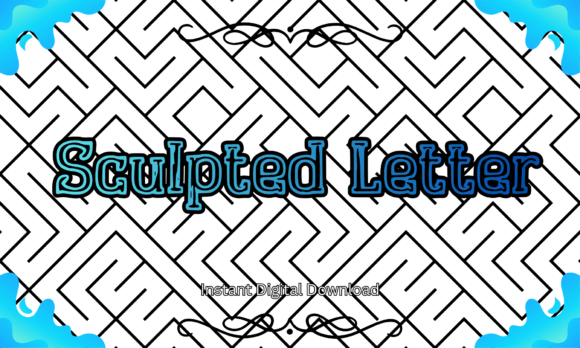
Sculpted Letter is categorized as a dimensional display font, but its specific construction sets it apart from generic 3D typefaces. The design draws inspiration from physical masonry and geometric mazes, resulting in letterforms that appear carved rather than extruded. This distinction is critical for designers seeking a "modern artifact" look. Where many three-dimensional fonts rely on heavy drop shadows or bevels to create depth, Sculpted Letter achieves volume through negative space and internal linework.
The defining feature of this typeface is its hollowed-out centers. This structural choice serves two purposes: it reduces the visual weight of the characters despite their bold footprint, and it allows background elements to interact with the typography. In complex compositions, such as gaming thumbnails or textured posters, solid block letters can obscure vital imagery. The inline carving effect of Sculpted Letter maintains legibility while preserving the integrity of the underlying composition. This makes it particularly effective for designs where the relationship between text and image must remain dynamic rather than hierarchical.
Comparing Dimensional Styles and Alternatives
When evaluating Sculpted Letter against other options in the display category, it is helpful to distinguish between different approaches to dimensional type. Designers typically choose between three categories when seeking bold, structural lettering:
- Extruded Block Fonts: These mimic physical signage with consistent side-depth. They are excellent for retro or industrial themes but can feel static or overly heavy in digital contexts.
- Graffiti and Street Art Styles: These offer high energy and organic flow but often lack the precision required for corporate tech branding or clean UI headers.
- Geometric Inline Displays: This is the category Sculpted Letter occupies. It offers the authority of a block font with the sophistication of line art.
Compared to standard extruded fonts, Sculpted Letter offers greater flexibility in color application. Because the face of the letter is separated from the "carved" lines by transparency, designers can apply contrasting colors to the outline and the fill independently without complex masking. However, this complexity comes with tradeoffs. While an extruded block font remains legible at smaller sizes, the intricate inline details of Sculpted Letter require significant scale to render correctly. If your project demands versatility across both billboard-sized banners and mobile app buttons, this typeface may only serve the larger applications, necessitating a secondary font pairing for smaller text.
Technical Compatibility and Workflow Integration
A major decision factor for independent creators and small studios is software compatibility. Sculpted Letter bridges the gap between professional vector environments and consumer-grade crafting tools. Its availability across platforms like Adobe Illustrator and Affinity Designer ensures it meets professional prepress standards, while native support for Cricut Design Space and Silhouette Studio makes it accessible for physical product creation.
For users working in Canva or Procreate, the font’s inherent texture eliminates the need for advanced blending modes or custom brushwork to achieve a carved look. This efficiency is valuable for content creators producing high-volume assets like YouTube thumbnails or social media graphics. However, professionals should note that while the font works in raster-based apps like Photoshop, it performs best in vector environments. Scaling rasterized versions of intricate inline fonts can lead to aliasing artifacts, whereas vector formats preserve the crisp edges necessary for the "chiseled" illusion to hold up under scrutiny.
Strategic Use Cases and Best-Fit Scenarios
Determining whether Sculpted Letter is the correct resource depends heavily on the project's tone and medium. Based on its structural characteristics, this typeface excels in specific environments while falling short in others.
Ideal Applications
Tech and Futuristic Branding: The geometric precision aligns well with technology sectors, particularly those involved in hardware, architecture, or cybersecurity. The font suggests structure, engineering, and stability without feeling dated.
Gaming and Esports Graphics: The aggressive, angular nature of the letterforms complements competitive gaming aesthetics. The hollow centers allow streamers and designers to place team logos or sponsor imagery inside the text itself, creating integrated branding opportunities.
Physical Merchandise and Apparel: For T-shirt designs and stickers, the reduced ink coverage of the hollowed-out centers is a practical advantage. It lowers printing costs for screen printing and reduces material usage for vinyl cutting, all while maintaining a bold visual presence from a distance.
Editorial and Poster Art: Modern art galleries and conceptual book covers benefit from the font's duality. It reads as both text and image, serving as a graphic element that anchors abstract layouts.
Limitations and When to Look Elsewhere
Despite its strengths, Sculpted Letter is not a universal solution. Designers should consider alternative options in the following scenarios:
- Long-Form Body Text: This is strictly a display face. Using it for paragraphs or extended captions will cause eye strain and reduce readability. Pair it with a clean geometric sans-serif or a neutral grotesque for body copy.
- Luxury and Heritage Brands: The maze-like geometry reads as modern and synthetic. If a brand requires warmth, tradition, or organic elegance, a high-contrast serif or hand-lettered script would be more appropriate.
- Low-Resolution Digital Interfaces: On standard definition screens or at small point sizes, the inline details may blur or disappear entirely. Reserve this font for hero sections, large headers, or print media where resolution is sufficient to capture the intricacy.
- Minimalist Corporate Identity: While authoritative, the font has a decorative quality. Companies prioritizing extreme minimalism or invisible design may find the carved texture too expressive or distracting.
Making the Final Selection Decision
Choosing Sculpted Letter ultimately comes down to assessing the need for structural expression versus functional neutrality. If the goal is to create a focal point that communicates strength, modernity, and craftsmanship, this typeface provides a ready-made solution that avoids the clichés of standard bold typography. Its ability to integrate with backgrounds through negative space offers creative latitude that solid fonts cannot match.
However, informed selection also means recognizing constraints. Evaluate your primary output format before committing. If you are designing exclusively for web interfaces at small scales, the investment in this specific style may not yield returns. Conversely, if your workflow spans from digital thumbnails to physical vinyl decals, the cross-platform compatibility and scalable vector nature of Sculpted Letter make it a highly efficient asset. By weighing these practical factors alongside aesthetic preferences, designers can ensure the typeface serves the project's strategic goals rather than merely decorating the surface.