Letterpunk: Injecting Raw Rebellion and Authentic Noise Into Modern Design
In an era where digital design tools often prioritize perfect symmetry, smooth vectors, and sterile minimalism, many creatives find themselves searching for a typeface that feels genuinely human. The challenge is not finding a font that is legible, but finding one that possesses a soul. For designers working within subcultures, music industries, or alternative fashion, standard display fonts frequently fail to capture the necessary grit. This is where Letterpunk becomes an essential resource. It is a bold grunge brush script display font explicitly built for rebellion, noise, and raw expression, offering a solution for projects that demand to be felt as much as they are read.
Solving the Sterility Problem in Alternative Design
The primary obstacle for designers in the punk, streetwear, and underground art scenes is authenticity. Using a clean, geometric sans-serif on a gig poster or a distressed t-shirt can create a cognitive dissonance; the message says "chaos," but the typography says "corporate safety." Audiences in these niches are highly attuned to visual cues and can instantly detect when a design feels manufactured rather than lived-in.
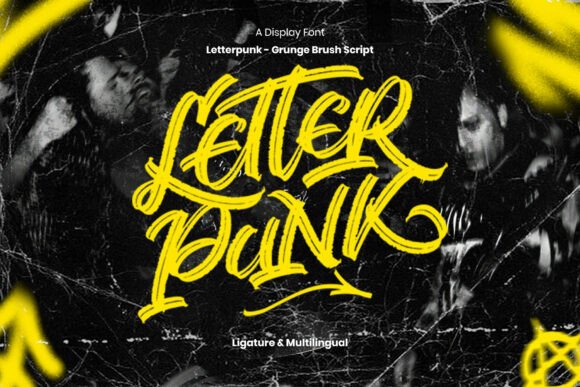
Letterpunk addresses this specific pain point by embracing imperfection as a feature rather than a flaw. Inspired directly by underground punk scenes, DIY zine culture, chaotic live gigs, and street protest visuals, this typeface delivers aggressive hand-painted strokes that mimic the urgency of analog creation. The dynamic movement and authentic textured edges provide an immediate sense of history and resistance. When your goal is to communicate unapologetic energy, Letterpunk serves as a bridge between modern digital workflows and the tactile, messy reality of counter-culture aesthetics.
Practical Applications Across Creative Disciplines
Versatility is crucial for any display font investment. While Letterpunk is undeniably loud, its utility extends across various mediums where high-impact typography is required. Understanding how to deploy this font effectively can elevate a project from amateur to professional-grade subcultural branding.
- Music Promotion and Album Art: Whether designing a flyer for a basement show or a vinyl sleeve for a hardcore band, the font’s aggressive strokes cut through visual clutter. It pairs exceptionally well with high-contrast photography and xerox-style textures.
- Streetwear and Merchandise: Urban fashion relies heavily on graphic impact. Letterpunk works beautifully for oversized back prints, chest logos, and woven labels. Its raw texture translates well to screen printing and direct-to-garment methods, maintaining its integrity even on textured fabrics.
- Social Media Graphics: In the fast-scrolling environment of Instagram and TikTok, static perfection is often ignored. The distortion and noise inherent in Letterpunk act as a visual hook, stopping the scroll by presenting something that looks handmade and urgent.
- Packaging and Labels: For craft beverages, hot sauces, or artisanal products targeting an edgy demographic, this typeface adds shelf presence. It signals that the product inside is bold, unfiltered, and distinct from mass-market competitors.
Technical Versatility Meets Aesthetic Chaos
A common misconception about grunge and brush script fonts is that they sacrifice usability for style. However, for a font to be truly useful in professional workflows, it must offer comprehensive character support. Letterpunk distinguishes itself by including uppercase, lowercase, numerals, symbols, and ligatures. This extensive character set allows designers to create complex lockups and headlines without resorting to awkward spacing or missing glyphs.
Furthermore, multilingual support ensures that the spirit of resistance is not limited by language barriers. For international campaigns or brands with a global audience, maintaining typographic consistency across different languages is vital. The inclusion of ligatures also adds a layer of sophisticated connectivity to the chaos, allowing letters to flow together in a way that mimics natural handwriting speed and rhythm. This attention to technical detail means you can focus on the creative application rather than fighting the limitations of the typeface.
Strategic Implementation: Balancing Volume and Legibility
Because Letterpunk is designed to be shouted, it requires strategic restraint during implementation. Treat this typeface as the lead vocalist in your design composition; it should command attention, but it needs a backing band to function correctly. Overusing such a visually dense font can lead to illegibility and viewer fatigue.
For optimal results, pair Letterpunk with neutral, utilitarian typefaces. A clean monospaced font or a simple grotesque sans-serif provides the necessary negative space and contrast to let the grunge elements breathe. Use Letterpunk for primary headlines, call-to-actions, and emotive keywords, while relegating body copy and logistical information (like dates, venues, or pricing) to more legible companions. This hierarchy ensures that the rebellion is focused and effective, rather than overwhelming.
Tailoring the Approach for Different User Needs
Different creatives will leverage Letterpunk to solve unique problems based on their specific industry context. Recognizing these distinctions helps in maximizing the font's potential.
For Graphic Designers and Art Directors
Your focus is likely on composition and brand identity. You might use Letterpunk to establish a "sonic" quality in visual work, translating audio aggression into visual form. Experiment with scaling, rotation, and overlapping to create custom logotypes that feel bespoke. The textured edges allow for seamless integration with grainy overlays and film dust assets, helping composite images feel cohesive.
For Independent Musicians and Promoters
Budget and speed are often constraints. Letterpunk offers a shortcut to professional-level aesthetic credibility without requiring hours of custom hand-lettering. Use it to maintain visual consistency across tour posters, social media announcements, and merchandise. The font’s inherent DIY ethos aligns perfectly with independent promotion, signaling authenticity to fans who value grassroots efforts over polished corporate marketing.
For Apparel and Product Designers
Production considerations are paramount. When using Letterpunk for print, pay close attention to ink spread and minimum stroke width. While the font is bold, the distressed edges can sometimes break up on lower-resolution prints or certain fabrics. Always request a physical proof or test print before committing to a large run. Consider using the font in high-contrast colorways (e.g., white ink on black cotton) to preserve the definition of the brush strokes.
Embracing Typography as a Voice of Resistance
Ultimately, selecting a typeface is a communication decision. Letterpunk captures the spirit of resistance and distortion because it refuses to conform to digital standards of cleanliness. It reminds viewers that behind every pixel is a human hand, and behind every message is a genuine emotion. For adults seeking to improve their design output with practical, impactful resources, this font offers more than just letterforms; it offers a vocabulary for expression that is loud, unapologetic, and authentically alive.
When typography isn’t just read but shouted, it changes the relationship between the creator and the audience. By integrating Letterpunk into your toolkit, you equip yourself with the ability to cut through the noise of the digital landscape, delivering designs that resonate with the raw, unfiltered energy of the cultures they represent. Whether you are branding a new label, designing a protest banner, or refreshing a streetwear line, this typeface ensures your visual voice remains as powerful as your intent.