Simply Gothic: Evaluating a Modern Blackletter Display Font
Selecting the appropriate typeface for dark-themed or historical branding requires balancing aesthetic impact with functional legibility. Simply Gothic is a bold gothic display font designed to address this specific challenge. Characterized by sharp corners, pointed terminals, and a clean blackletter-inspired structure, it offers a distinct visual identity that bridges the gap between traditional medieval typography and contemporary graphic design standards. For designers, brand managers, and artists evaluating type options, understanding the specific utility and limitations of Simply Gothic is essential for making an informed selection.
Defining the Typographic Profile
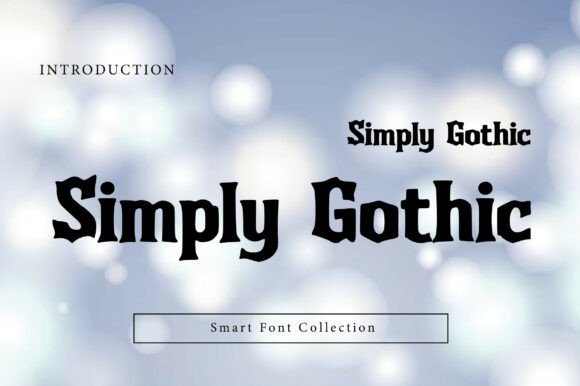
Simply Gothic distinguishes itself through a deliberate simplification of classic blackletter forms. Traditional gothic fonts often feature dense textures, complex ligatures, and ornate flourishes that can hinder readability at smaller sizes or in digital environments. Simply Gothic retains the dramatic attitude and vertical rhythm associated with the genre but strips away excessive ornamentation. The result is a typeface with a high x-height and open counters that maintain the authoritative presence of gothic script while ensuring clarity.
The font’s construction relies on geometric precision rather than calligraphic imitation. Sharp corners and pointed terminals provide a crisp edge that reproduces well across various media, from large-format printing to screen-based applications. This structural cleanliness makes it a hybrid solution; it evokes the historical weight of Old English or Textura styles without demanding the same level of visual decoding from the reader. When evaluating this typeface, it is best categorized as a modernized display face intended for headlines and logos rather than a text face for extended reading.
Primary Use Cases and Applications
Evaluating whether Simply Gothic aligns with a project requires examining its performance in specific contexts. Its design parameters make it particularly effective in scenarios where immediate visual recognition and thematic resonance are priorities.
- Brand Identity and Logos: The bold weight and simplified geometry allow Simply Gothic to function effectively as a logotype. It provides instant genre signaling for brands in the music, gaming, craft beverage, and alternative fashion sectors. The letterforms are distinct enough to be memorable yet simple enough to remain legible when scaled down for social media avatars or business cards.
- Editorial and Packaging Design: For book covers, album artwork, and product packaging, the font delivers necessary contrast against busy backgrounds or illustrative elements. Its strong silhouette ensures that titles and product names remain the focal point even when surrounded by intricate dark-themed imagery.
- Event and Seasonal Branding: Halloween, horror conventions, and historical reenactments require typography that establishes atmosphere quickly. Simply Gothic offers a more refined alternative to distressed or novelty horror fonts, providing a sense of established tradition and quality rather than temporary kitsch.
- Tattoo and Merchandise Art: The sharp lines and bold strokes translate exceptionally well to embroidery, screen printing, and tattoo stencils. Complex blackletters often lose definition in these mediums, but the streamlined nature of Simply Gothic maintains integrity during reproduction.
Benefits and Strategic Advantages
The primary advantage of choosing Simply Gothic lies in its usability. Designers frequently avoid authentic blackletter fonts due to concerns about accessibility and audience alienation. Simply Gothic mitigates these risks by prioritizing modern legibility standards. Readers unfamiliar with historical scripts can still parse the text rapidly, reducing cognitive load while maintaining the desired aesthetic.
Furthermore, the typeface offers versatility within the dark aesthetic niche. It avoids the overly aggressive or chaotic appearance of some metal-focused fonts, making it suitable for luxury or heritage brands that wish to convey sophistication alongside darkness. This duality allows for broader application across different market segments. From a technical standpoint, the clean vector paths ensure consistent rendering across operating systems and print processes, minimizing production issues common with highly detailed decorative fonts.
Tradeoffs and Limitations
Despite its strengths, Simply Gothic is not a universal solution. Understanding its limitations is crucial for avoiding misapplication. As a display font, it is unsuitable for body copy. Setting paragraphs in Simply Gothic will create a dense, fatiguing reading experience due to the uniform stroke width and vertical stress. It should strictly be reserved for titles, headers, captions, and short phrases.
Additionally, the simplified structure may lack the historical authenticity required for certain academic or period-specific projects. If the goal is to replicate a 15th-century manuscript or achieve strict historical accuracy, a traditional Textura or Schwabacher typeface would be more appropriate. Simply Gothic is a modern interpretation, and its geometric nature will be apparent to typographically literate audiences.
Designers must also consider spacing. Bold gothic displays often require careful tracking adjustments. While Simply Gothic is designed with balanced metrics, tight spacing can cause the pointed terminals to clash visually, while excessive spacing can break the word shape. Manual kerning is often necessary to achieve optimal optical balance, particularly in all-caps settings.
Comparing Alternatives and Decision Criteria
When deciding whether to implement Simply Gothic, it is helpful to compare it against adjacent typographic categories. If a project requires a darker tone but higher legibility than Simply Gothic offers, a heavy serif or slab-serif typeface might be preferable. These alternatives convey stability and tradition without the stylistic friction of blackletter forms. Conversely, if the project demands extreme aggression or illegibility as an artistic choice, grunge or distortion-heavy gothic fonts would serve better.
The decision to use Simply Gothic should ultimately rest on three evaluation criteria:
- Audience Familiarity: Is the target audience comfortable reading blackletter? If the audience is general or older, Simply Gothic’s simplified forms are safer than traditional variants. If the audience consists of typography enthusiasts or historians, they may prefer a more authentic revival.
- Reproduction Medium: Will the design be viewed primarily on screens, embroidered, or printed at small sizes? Simply Gothic performs well in these constrained environments. If the output is exclusively large-format print, a more intricate blackletter could be utilized without legibility penalties.
- Brand Longevity: Is the gothic element central to the permanent brand identity or a temporary campaign? Simply Gothic’s clean aesthetic tends to age better than trendy, distressed horror fonts, making it a stronger investment for long-term brand assets.
Practical Implementation Insights
To maximize the effectiveness of Simply Gothic, designers should pair it with complementary typefaces that provide necessary contrast. A clean sans-serif or a neutral humanist serif works best for supporting text, allowing the gothic display face to stand out without competing for attention. Avoid pairing it with other decorative or script fonts, as this creates visual clutter and dilutes the impact of the headline.
Color selection also influences perception. While traditionally associated with black ink on white paper, Simply Gothic adapts well to metallic foils, deep reds, and muted earth tones. Testing the font in the final color palette is recommended, as the bold strokes can appear heavier in light colors on dark backgrounds due to optical irradiation. Adjusting the weight or tracking based on background value ensures consistent visual performance.
Ultimately, Simply Gothic serves as a pragmatic tool for designers seeking to leverage the cultural associations of gothic typography without sacrificing modern communication standards. By evaluating its specific characteristics against project requirements, stakeholders can determine if it provides the right balance of dramatic flair and functional clarity for their specific needs.