Backdrop: Mastering Elegant Script Typography Without Common Pitfalls
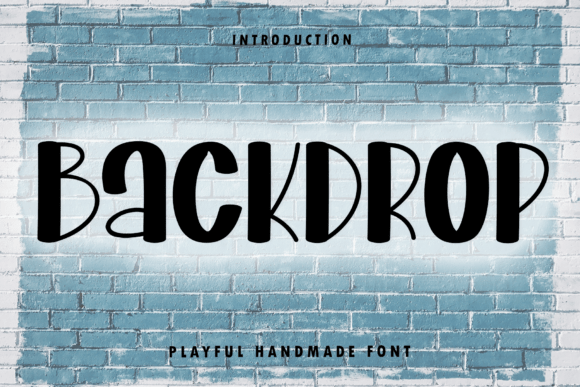
When selecting typography for luxury branding or intimate event stationery, the difference between amateur and professional design often lies in the nuance of the typeface itself. Backdrop is an elegant and fluid handwritten script font that captures the essence of a modern, sophisticated aesthetic. It distinguishes itself through graceful, high-contrast strokes and sweeping loops that mimic the natural rhythm of hand lettering rather than digital rigidity. However, owning this typeface is only the first step. The true challenge lies in application. Many designers and business owners invest in premium scripts like Backdrop only to undermine their elegance through improper spacing, poor pairing, or contextual mismatches. Understanding how to leverage its expansive horizontal presence and delicate connections is essential for achieving that high-end, personalized look you envision.
Understanding the Anatomy of Fluid Scripts
Before setting a single word, it is vital to understand why Backdrop behaves differently than standard serif or sans-serif fonts. Its design relies on fine, tapering terminals and rhythmic flow. A common mistake beginners make is treating this script as if it were a standard text font. Because the letterforms are designed with specific entry and exit strokes, manually adjusting the tracking (letter-spacing) can be disastrous.
Tightening the tracking to fit more text into a line often causes the delicate connecting strokes to overlap awkwardly or break entirely, destroying the illusion of continuous handwriting. Conversely, adding too much space can sever the visual relationship between characters, making the word look disjointed. When working with Backdrop, trust the type designer’s original metrics. If the spacing feels off at a specific size, adjust the point size or the leading (line height) rather than forcing the kerning. Let the font breathe as intended to maintain its organic integrity.
The Trap of Over-Styling and Excessive Flourishes
One of the most frequent errors in luxury editorial and wedding design is the compulsion to maximize every available feature. Backdrop includes sweeping loops and ornamental alternates that are undeniably beautiful. Yet, using every alternate character in a single headline creates visual noise rather than sophistication. This "maximalist" approach often signals inexperience to a discerning audience.
Elegance is defined by restraint. When designing a wedding invitation suite or a lifestyle photography overlay, select one or two key moments for embellishment. Perhaps use a swash capital only at the beginning of a name, or employ a stylistic alternate solely to fix an awkward connection. The goal is to guide the reader’s eye smoothly across the composition. If every letter demands attention, the hierarchy collapses, and the message becomes difficult to parse. Use these decorative elements as accents, not the baseline.
Prioritizing Legibility in High-Contrast Environments
High-contrast strokes are a hallmark of Backdrop’s sophisticated appeal, but they also present technical challenges in reproduction. The hairlines—the thinnest parts of the stroke—are exquisite on screen but can disappear during printing or when applied over busy photographic backgrounds. I have seen countless projects where a stunning digital mockup failed in production because the designer did not account for ink spread or background contrast.
- Test Print Early: Never assume screen resolution equals print fidelity. Always run a physical proof at actual size to ensure the fine tapering terminals remain crisp.
- Background Management: When using Backdrop as an overlay on lifestyle photography, ensure there is sufficient negative space or apply a subtle gradient mask behind the text. Placing thin script directly over complex textures guarantees readability issues.
- Minimum Size Thresholds: Avoid using this typeface below 14pt for print or equivalent pixel dimensions for web. Below this threshold, the delicate connections risk breaking up, compromising the premium feel.
Pairing Strategies That Preserve Sophistication
A script font never exists in isolation. How you pair Backdrop determines whether your design feels cohesive or chaotic. A pervasive misunderstanding is that a fancy script needs another decorative font to match its energy. This usually results in a cluttered, unreadable layout that confuses the viewer and dilutes the brand message.
The most effective pairing strategy relies on contrast. Backdrop carries significant personality and horizontal weight; it requires a grounding partner. Opt for clean, minimalist sans-serifs or structured serifs with generous x-heights. These supporting typefaces should recede visually, allowing the script to serve as the focal point without competition. For example, in high-end editorial signatures, let Backdrop handle the signature element while a neutral geometric sans-serif manages the contact details and body copy. This balance ensures communication remains clear while retaining the desired emotional resonance.
Evaluating Licensing and Technical Compatibility
Beyond aesthetics, practical considerations regarding licensing and software compatibility frequently trip up freelancers and small business owners. Assuming that purchasing a font grants universal usage rights is a costly error. Backdrop is positioned as a premium asset, and its license terms may differ significantly between personal, commercial, and extended use cases.
Before finalizing a purchase or starting a client project, verify the specific license tier required. Using a desktop license for a logo that will be trademarked, or embedding the font in a customizable template for resale without an extended license, exposes you to legal and financial risk. Additionally, check software support. While Backdrop performs beautifully in professional tools like Adobe Illustrator or Affinity Designer, some web platforms or basic editors may not render OpenType features correctly. If your workflow relies heavily on browser-based design tools, test the font’s functionality there first to avoid discovering missing ligatures or broken alternates mid-project.
Making an Informed Decision
Ultimately, choosing Backdrop should be a deliberate decision based on project requirements rather than trend following. Ask yourself if the content volume suits a display script. Long paragraphs of body copy set in any handwritten font, no matter how legible, will fatigue readers and diminish perceived value. Reserve Backdrop for headlines, signatures, pull quotes, and short-form branding elements where its rhythmic flow can be appreciated without strain.
By respecting the technical constraints and aesthetic principles of this typeface, you transform it from a mere decorative element into a powerful communication tool. The sophistication of Backdrop lies not just in its design, but in your ability to apply it with intention, restraint, and technical precision. When used correctly, it elevates your work from generic to genuinely bespoke, creating an experience that resonates with audiences seeking authenticity and quality.