Line Script: Modern Outline Typography
In the evolving landscape of graphic design, the pendulum is swinging away from heavy, saturated visuals toward a more refined, breathable aesthetic. Designers and brand strategists are increasingly seeking typefaces that communicate sophistication without shouting. Enter Line Script, a modern display font that redefines the outline trend with a level of maturity rarely seen in decorative typography. Rather than relying on the chaotic energy often associated with hand-lettered scripts, this typeface offers a structured, sans-serif logic wrapped in a fluid, organic form. It is a tool built for the current moment, where clarity and style must coexist seamlessly.
Redefining the Outline Trend
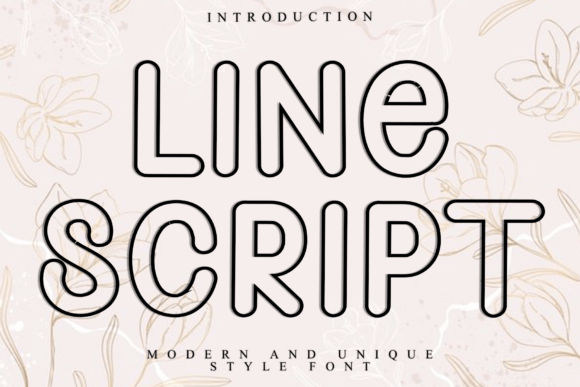
The outline or "hollow" text trend has cycled through design history multiple times, often associated with retro aesthetics or grunge styles. However, Line Script strips away the nostalgia and grit, presenting a version of the style that feels distinctly contemporary. The defining characteristic here is uniformity. Unlike traditional calligraphy that relies on stroke contrast to create rhythm, Line Script maintains a consistent stroke width throughout every glyph. This creates a visual cadence that is predictable and calming to the eye.
The terminals—the ends of the strokes—are soft and pill-shaped rather than sharp or tapered. This subtle detail significantly impacts the psychological reception of the text. Sharp edges can imply urgency or aggression, while rounded terminals suggest approachability and safety. When combined with the hollow interior, the result is a typeface that feels airy and lightweight. It occupies space physically but remains visually permeable, allowing it to integrate into complex layouts without creating visual heaviness or clutter.
The Intersection of Structure and Fluidity
One of the most common pitfalls in script typography is legibility. Many display scripts prioritize artistic flair over readability, making them unsuitable for anything beyond a single word or short phrase. Line Script avoids this trap by grounding its design in sans-serif proportions. While the connecting strokes provide the necessary flow to classify it as a script, the underlying skeleton is geometric and balanced.
This hybrid nature makes it exceptionally versatile. It possesses the human touch of handwriting but retains the professional reliability of a constructed typeface. For designers, this means you can use Line Script in contexts where a traditional cursive might feel too informal or messy, yet a standard sans-serif would feel too sterile. It bridges the gap between corporate polish and creative expression, making it ideal for brands that want to appear established yet innovative.
Practical Applications Across Industries
The true value of any typeface lies in its utility. Line Script’s unique construction opens up specific opportunities across various sectors where tone and visual hierarchy are paramount.
- Boutique Branding and Packaging: For luxury goods, skincare lines, or artisanal products, the font conveys "quiet luxury." Its delicate outline suggests exclusivity and attention to detail without the ostentation of gold foil or heavy serifs. On packaging, the hollow design allows the color of the box or bottle to show through the letterforms, creating an integrated color palette.
- Social Media Content Creation: In the fast-scrolling environment of Instagram and TikTok, text must be instantly readable yet visually arresting. Line Script works beautifully as a headline overlay on photography. Because the center of each letter is transparent, background textures and images remain visible, preventing the text from blocking key visual elements of the photo.
- Editorial and Magazine Layouts: Art directors can utilize this typeface for pull quotes, drop caps, or section headers. It adds a layer of editorial elegance that breaks up dense body copy. The modern feel aligns well with fashion, lifestyle, and design publications aiming for a forward-thinking aesthetic.
- Event Stationery and Invitations: Moving beyond wedding invitations, this font suits corporate galas, product launches, and gallery openings. It signals that an event is curated and thoughtful. The clean lines reproduce exceptionally well on both digital screens and printed cardstock, ensuring brand consistency across physical and digital touchpoints.
- Educational and Workshop Materials: For creatives selling courses or workshops, Line Script projects expertise mixed with creativity. It avoids the juvenile look of some handwritten fonts while maintaining the personal connection necessary for education-based marketing.
Maximizing Usability and Visual Hierarchy
Implementing an outlined typeface requires a different approach than working with solid fills. To get the most out of Line Script, designers must consider contrast and scale. Because the strokes are uniform and hollow, the font needs sufficient size to maintain legibility. Using it at very small sizes can cause the negative space inside the letters to disappear, reducing readability. It performs best as a display face, typically above 24pt in print or equivalent pixels on screen.
Contrast is equally critical. Line Script thrives against high-contrast backgrounds. White outlines on dark charcoal, black, or deep navy create a striking neon-like effect that feels premium. Conversely, dark outlines on cream or light gray offer a softer, more understated elegance. Designers should avoid placing this font over busy, multi-colored backgrounds without a solid backing or shadow, as the transparency that makes it special can also become a liability if the background competes too aggressively with the stroke definition.
Enhancing Brand Communication Through Typography
Typography is never just about aesthetics; it is a primary vehicle for communication. Choosing Line Script sends specific signals to an audience. It suggests that a brand values modernity and transparency. The open forms of the letters metaphorically align with concepts of openness, honesty, and clarity. In an era where consumers are skeptical of overly polished corporate messaging, a typeface that literally lets the light shine through can foster a sense of trust.
Furthermore, the efficiency of this typeface cannot be overstated. In the past, achieving this specific look often required custom lettering or modifying existing fonts manually, a time-consuming process that increased project costs. Having a dedicated, professionally kerned typeface like Line Script streamlines the workflow. Designers can iterate quickly, testing different headlines and lockups without worrying about inconsistent spacing or awkward connections. This efficiency translates directly to productivity, allowing creative professionals to focus on concept development rather than technical repairs.
Considerations for Selection and Implementation
While Line Script is a powerful asset, it is not a universal solution. It is specifically a display typeface and should never be used for body text or long-form reading. Its purpose is to capture attention and set a mood, not to facilitate sustained reading. When building a typographic system, pair it with a clean, neutral sans-serif or a highly legible serif for supporting text. This pairing reinforces the specialness of the script; if everything is decorative, nothing stands out.
Additionally, consider the medium of final output. For digital applications, ensure that the stroke width renders clearly on mobile devices. For print, verify that the chosen production method can handle fine lines. While modern digital printing handles outlines effortlessly, certain specialty techniques like embossing or foil stamping may require a minimum stroke width to hold properly. Always consult with your printer or test digital proofs at actual size before finalizing production files.
Ultimately, Line Script represents a shift toward intentional minimalism. It provides a way to embrace decoration without sacrificing structure, offering a sophisticated alternative to the heavy bold types that have dominated recent years. For designers, marketers, and business owners looking to refresh their visual identity with something that feels both current and timeless, this typeface offers a compelling blend of form and function. It is a reminder that in design, sometimes less truly is more, provided that "less" is executed with precision and purpose.