Evaluating Zeroha: A Practical Guide to Modern Editorial Serif Typography
Selecting the right typeface for high-end editorial or branding projects often involves navigating a crowded market of serif fonts. While many options claim to offer luxury or sophistication, few successfully balance historical Roman elegance with the sharp precision required for contemporary digital and print layouts. Zeroha has emerged as a distinct option in this space, specifically engineered for designers who need a typeface that communicates prestige without feeling dated. Understanding where this font fits within your typographic system requires looking beyond its aesthetic appeal to evaluate its functional strengths, technical specifications, and appropriate use cases compared to other market alternatives.
Defining the Zeroha Aesthetic and Technical Profile
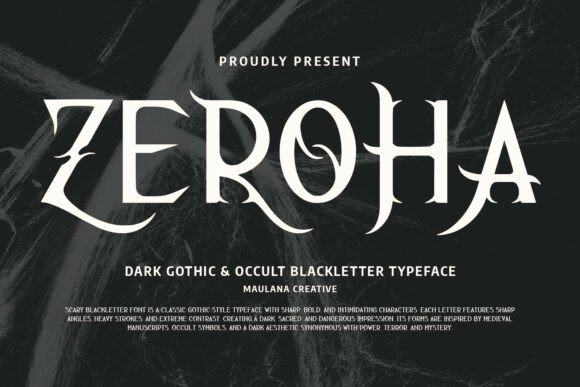
Zeroha is best categorized as a modern editorial serif, but it distinguishes itself through specific anatomical choices that separate it from standard Didones or Transitional serifs. The typeface is defined by high-contrast strokes and needle-like terminals, creating a visual texture that is both delicate and assertive. Unlike softer, more organic serifs that evoke a sense of warmth or tradition, Zeroha leans into geometric precision. This makes it particularly effective for brands attempting to bridge the gap between classic typography and modern minimalism.
From a technical standpoint, accessibility is a key differentiator. Many display serifs require specialized software or complex OpenType feature activation to access stylistic alternates and flourishes. Zeroha utilizes PUA (Private Use Area) encoding, allowing users to access all glyph variations directly through standard character maps or copy-paste methods without needing advanced design tools. For freelance designers, small agency teams, or content creators working across multiple platforms, this reduces friction in the workflow. It ensures that the intended ornamental details remain consistent whether the file is opened in Adobe Illustrator, Canva, or a web-based layout tool.
Comparative Analysis: Zeroha Versus Traditional Luxury Serifs
When evaluating Zeroha against established luxury serifs, several tradeoffs become apparent. Traditional high-contrast serifs, such as those in the Bodoni or Didot families, are industry standards for fashion and luxury. However, these historical revivals can sometimes feel overly familiar or rigid in modern contexts. Zeroha offers a contemporary reinterpretation that retains the vertical stress and dramatic contrast of its predecessors while introducing sharper, more aggressive detailing.
- Visual Weight: Where traditional luxury serifs often maintain a consistent thinness in their hairlines, Zeroha varies stroke modulation to improve legibility at medium sizes while retaining drama at large scales.
- Terminal Style: Classic serifs typically feature ball terminals or flat brackets. Zeroha’s needle-like terminals create a sense of forward momentum and precision that aligns better with tech-forward luxury or avant-garde fashion than with heritage brands.
- Digital Adaptation: Older serif designs were created for metal type and later digitized, sometimes resulting in rendering issues on screens. Zeroha was designed with modern display environments in mind, prioritizing screen clarity alongside print fidelity.
However, this modernization comes with limitations. If a project requires deep historical authenticity—such as a rebrand for a centuries-old institution or a period-accurate publication—a dedicated historical revival may be more appropriate. Zeroha signals "new luxury" rather than "heritage," and using it in a context demanding antiquity could create a tonal dissonance.
Optimal Pairing Strategies and Visual Hierarchy
The success of any display serif depends heavily on its supporting cast. Zeroha’s intricate details and high contrast demand a pairing strategy based on restraint and negative space. Because the font carries significant visual weight and personality, pairing it with another decorative typeface usually results in clutter. Instead, clean, airy sans-serifs provide the necessary counterbalance to establish a professional visual hierarchy.
For upscale restaurant menus or hospitality branding, consider pairing Zeroha with a humanist sans-serif or a neutral grotesque. The sans-serif should handle body copy, pricing, and logistical information, allowing Zeroha to function exclusively as a focal point for headers, dish names, or brand identifiers. This separation of duties prevents reader fatigue. In portfolio design, where the goal is to showcase work without distraction, Zeroha can serve as a structural element for section dividers or project titles, while a highly legible monospaced or geometric sans-serif manages metadata and captions.
A common mistake when implementing high-contrast serifs is insufficient leading or tight tracking. Zeroha requires generous whitespace to allow its razor-sharp serifs to breathe. Cramping this typeface diminishes its impact and can make the needle terminals appear jagged rather than elegant. When setting headlines, opt for looser tracking than you might use with a bold sans-serif; this enhances the sophisticated, unhurried cadence associated with premium editorial design.
Use Cases: Where Zeroha Excels and Where to Look Elsewhere
Determining whether Zeroha is the correct specification for a project involves assessing the medium, scale, and brand voice. This typeface excels in specific environments but faces challenges in others.
Ideal Applications
Large Display Sizes: Zeroha is fundamentally a display typeface. Its intricate details and flourishes are only visible and effective at larger point sizes. Book covers, magazine mastheads, billboard advertising, and hero sections on websites are prime environments. At these scales, the PUA-encoded alternates add bespoke customization that elevates the design above template-based aesthetics.
Fashion and Beauty Branding: The sharp, confident lines of Zeroha align naturally with industries that value precision and modernity. It works exceptionally well for cosmetic packaging, boutique logos, and lookbooks where the typography must convey quality through form alone.
Minimalist Editorial Layouts: For designers adopting a Swiss or International Style approach who still desire serif warmth, Zeroha provides a compromise. It offers the structure of modernism with the emotional resonance of a serif, preventing minimalist layouts from feeling sterile.
Situations Requiring Alternatives
Extended Body Copy: High-contrast serifs are notoriously difficult to read in long-form text. The extreme variation between thick and thin strokes creates visual vibration that tires the eye. For novels, annual reports, or dense informational websites, a low-contrast serif or a robust sans-serif is a superior choice. Reserve Zeroha for headings and pull quotes only.
Low-Resolution Environments: While optimized for modern screens, needle-like terminals can disappear or alias poorly on low-DPI displays or in small footer text. If the primary touchpoint is a mobile app used in variable lighting conditions or printed materials on uncoated paper where ink spread is unpredictable, test Zeroha rigorously before commitment. A sturdier slab serif or rounded sans-serif may offer better resilience in these harsh conditions.
Playful or Organic Brands: The geometry of Zeroha is precise and somewhat severe. It does not convey softness, whimsy, or handcrafted imperfection. Children’s products, eco-friendly brands emphasizing raw nature, or casual lifestyle companies may find the font too austere. In these cases, a rounded serif or a textured display face would better communicate the desired brand attributes.
Making the Final Typographic Decision
Choosing Zeroha should be a deliberate decision based on project requirements rather than trend following. Evaluate the font against three criteria: legibility at the intended size, tonal alignment with the brand message, and technical compatibility with your production workflow. The PUA encoding offers significant practical advantages for teams without dedicated typographers, streamlining the creation of custom logotypes and headers.
Ultimately, Zeroha represents a specific niche within the serif category: the intersection of editorial sharpness and accessible luxury. It is a tool for designers who want to signal sophistication through precision rather than ornamentation. By understanding its distinct position relative to historical classics and its optimal pairing strategies, you can leverage this typeface to create balanced, authoritative designs that stand the test of shifting trends. Always prototype with real content and test across intended media before finalizing your selection to ensure the theoretical elegance translates to practical performance.