Chiria: Mastering Street Decorative Display Typography
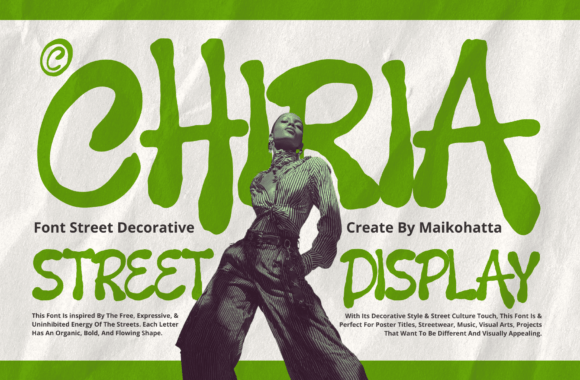
Chiria captures the raw, unfiltered energy of urban culture in a way that few digital typefaces manage to achieve. Inspired by graffiti art and organic brushstrokes, this bold decorative display font offers designers a direct line to street-style aesthetics without requiring hours of manual lettering. However, the very characteristics that make Chiria so visually striking are also what make it challenging to implement correctly. Many creators download this font expecting instant street credibility, only to find their designs looking cluttered or illegible because they treated it like a standard sans-serif.
To get the most out of Chiria, you must understand that it is not merely a text tool; it is a graphic element. Each character feels hand-drawn, carrying a unique weight and texture that demands space and intention. When used with precision, it transforms posters, streetwear branding, and music covers into authentic visual statements. When used without restraint, it undermines the professional quality of your work. The difference lies in avoiding common application errors and leveraging the font’s technical features properly.
The Legibility Trap in Urban Design
The most frequent mistake designers make with Chiria is prioritizing aesthetic density over communication. Because the letterforms are dynamic and expressive, there is a natural temptation to tighten the tracking and stack lines closely to create a solid block of texture. While this might look interesting as an abstract shape, it often renders the text unreadable at smaller sizes or from a distance.
Street art succeeds because it commands attention quickly. If your audience has to squint or decode the message, the impact is lost. A better approach is to treat Chiria as a headline or focal point rather than body copy. Allow the organic brushstrokes to breathe by increasing line height and tracking slightly more than you would with a geometric font. This negative space does not weaken the design; it frames the rebellious energy of the typeface and ensures the message lands effectively. Always test your layout at 50% zoom or print a physical proof to verify that the decorative elements do not merge into visual noise.
Overlooking PUA Encoding and Stylistic Alternates
Many users install Chiria and immediately begin typing, unaware that they are only accessing a fraction of the font's potential. A significant oversight is ignoring the Private Use Area (PUA) encoding. Chiria includes stylistic extras, swashes, and alternative characters that are essential for achieving a genuine hand-painted look. Relying solely on the default keyboard mapping often results in repetitive letterforms that feel mechanical rather than organic.
This lack of variation breaks the illusion of hand-crafted street art. To correct this, utilize software that supports OpenType features or use a character map utility to access PUA glyphs. Swapping out identical letters in words with double characters, such as "oo" or "ee," prevents visual monotony. These small adjustments elevate the design from a generic template to a custom piece of typography. Before finalizing any project, audit your text for repetitive shapes and replace them with available alternates to maintain the fluid, human quality that defines the Chiria style.
Contextual Mismatches and Brand Voice
Chiria carries a specific cultural weight associated with rebellion, youth culture, and modern urban attitudes. A critical error occurs when designers apply this aesthetic to contexts that require stability, tradition, or corporate formality. Using a graffiti-inspired display font for a law firm’s annual report or a medical clinic’s signage creates cognitive dissonance that confuses the audience and damages brand trust.
Evaluate the project’s emotional requirements before selecting this typeface. Chiria excels in environments where standing out is the primary goal, such as event promotion, apparel design, social media graphics, and creative portfolios. It communicates movement and attitude. If your project requires conveying safety, heritage, or minimalism, this font will likely work against you. Even within appropriate projects, balance is key. Pair Chiria with clean, neutral sans-serifs or simple serifs to ground the composition. Let the decorative font do the heavy lifting for emphasis while supporting typefaces handle information hierarchy and readability.
Technical Considerations for Digital and Print
The organic nature of Chiria’s brushstrokes presents unique technical challenges across different media. In digital environments, complex edges can appear pixelated or aliased on lower-resolution screens. Conversely, in print, fine details may fill in if the ink spread is not accounted for. Beginners often assume the font file will render perfectly everywhere, but professional results require media-specific testing.
- For Web and Social Media: Export headlines as SVGs or high-resolution PNGs rather than relying on web font rendering engines, which may struggle with intricate decorative outlines. This preserves the crispness of the brushwork.
- For Apparel and Merchandise: Consult with your printer regarding minimum stroke widths. Screen printing and embroidery have physical limitations that digital files do not. You may need to manually thicken thin connections in Chiria to prevent breakage during production.
- For Large Format Printing: Ensure you are working with vector outlines. Rasterizing this font at low resolution for a billboard or mural will expose jagged edges that destroy the hand-drawn illusion.
Making Informed Licensing and Usage Decisions
Before integrating Chiria into commercial work, verify the licensing terms specific to your intended use case. Decorative fonts often have distinct license tiers for personal projects, desktop publishing, web embedding, and merchandise. Assuming a single purchase covers all applications is a costly administrative risk. Review the End User License Agreement (EULA) carefully, particularly if you plan to use the font on products for sale or in client deliverables.
Beyond legality, consider the long-term viability of the typeface in your toolkit. Chiria is a specialized instrument. While it is perfect for making bold statements, it should not be the only display font in your library. Diversify your resources to ensure you can meet varied client needs without forcing a specific aesthetic where it does not belong. When you do choose Chiria, commit to mastering its nuances. Spend time exploring every glyph in the character set and experimenting with spacing. The designers who achieve the best results are those who respect the font as a crafted piece of art rather than a quick fix for adding "edge" to a layout.
Ultimately, successful use of Chiria comes down to intentionality. It rewards patience and punishes laziness. By respecting legibility standards, utilizing full character sets, matching context appropriately, and preparing files correctly for output, you transform this decorative display font from a novelty into a powerful asset for authentic urban storytelling. Approach each project with a corrective mindset, constantly asking if the type serves the message, and your work will resonate with the genuine energy that Chiria was designed to convey.