Evaluating Darksalmon: A Practical Guide to Distressed Display Typography
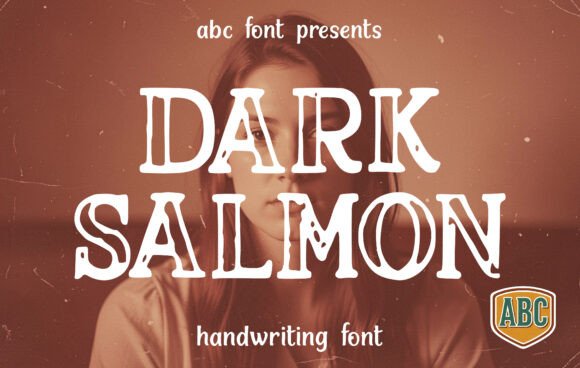
In the crowded landscape of display typography, finding a typeface that balances artistic texture with functional legibility is a persistent challenge for designers. Darksalmon emerges as a distinct solution for projects requiring high-impact visual communication without sacrificing organic warmth. Unlike standard distressed fonts that often rely on digital noise filters or repetitive grunge overlays, Darksalmon features thick, irregular strokes that mimic the physical imperfections of traditional print media. Its design philosophy centers on the aesthetic of vintage woodblock printing and ink bleed on textured paper, offering a soulful alternative to sterile, geometric sans-serifs.
For professionals evaluating this asset for commercial or creative work, understanding its specific mechanical traits is essential. This is not a versatile body text font; it is a specialized tool designed for headlines, titles, and short-form statements. Its value lies in its ability to convey atmosphere and authenticity instantly, making it particularly relevant for cinematic branding, street fashion, and artisanal packaging where emotional resonance drives engagement.
Anatomical Characteristics and Texture Quality
The primary differentiator of Darksalmon is the intentionality behind its distressing. Many display fonts achieve a "worn" look through post-processing degradation, which can result in artificial-looking pixelation or uniform erosion patterns. Darksalmon, conversely, integrates these details into the vector outlines themselves. The inner hollows and textural gaps are not random artifacts but curated design elements that replicate how viscous ink interacts with porous surfaces.
- Irregular Stroke Weight: The letterforms avoid perfect symmetry. Edges waver slightly, creating a hand-drawn cadence that feels human rather than algorithmic.
- Organic Negative Space: The internal gaps within the thick strokes prevent the type from appearing as a solid, heavy block. This negative space improves readability at smaller display sizes and adds visual complexity.
- Ink-Spread Simulation: The outer edges suggest the capillary action of ink absorbing into paper, softening the transition between type and background.
This anatomical precision matters for production quality. When scaled up for large-format printing or 4K video intros, the textures remain crisp and intentional rather than blurry or aliased. For designers working across multiple media, this consistency ensures that the brand identity remains stable whether viewed on a smartphone screen or a theater marquee.
Performance in Cinematic and Atmospheric Design
Darksalmon was evidently engineered with motion graphics and film titling in mind. In cinematic contexts, typography must compete with complex visual backgrounds while establishing tone before a single line of dialogue is spoken. The font’s heavy weight provides necessary contrast against dark, moody photography or low-light video footage, yet the distressed edges allow background textures to subtly show through the letterforms.
This integration capability is crucial for atmospheric design. When used in video intros or movie posters, Darksalmon avoids the "sticker sheet" effect where text looks pasted onto an image. Instead, it appears embedded within the scene. The irregularities catch light and shadow in compositing software more naturally than smooth vectors, allowing color grading and lighting effects to interact with the type as if it were a physical object in the environment. For editors and title designers, this reduces the need for extensive post-production texturing work, streamlining the workflow while elevating the final output.
Applications in Alternative Branding and Packaging
Beyond entertainment, Darksalmon serves a functional role in alternative branding sectors. Street fashion labels, independent music releases, and craft product packaging often reject corporate polish in favor of raw authenticity. In these markets, perfection can signal mass production, while controlled imperfection signals craftsmanship and exclusivity.
For streetwear, the font’s bold, aggressive stance communicates confidence without relying on cliché graffiti aesthetics. It bridges the gap between punk zine culture and modern retail legibility. Similarly, for artisanal goods like coffee roasters, breweries, or handmade apparel, the woodblock-inspired texture reinforces narratives of tradition and manual labor. However, practitioners should exercise restraint. Because the font carries significant visual weight and personality, it performs best when paired with minimalist supporting elements. Combining Darksalmon with other ornate or textured assets risks creating visual clutter that undermines both readability and sophistication.
Readability and Hierarchy Considerations
While aesthetically compelling, Darksalmon imposes strict hierarchy constraints. The very features that make it effective—distressing, irregularity, density—also limit its utility. It is strictly a headline face. Attempting to use it for subheads, captions, or body copy will degrade user experience and accessibility.
Professional application requires pairing it with highly legible companion typefaces. A clean geometric sans-serif or a neutral grotesque typically works best, providing a stable foundation that lets Darksalmon function as the focal point. Designers must also monitor tracking and kerning carefully. The irregular edges mean that default spacing may create awkward collisions or excessive gaps. Manual optical adjustment is often necessary to maintain even rhythm, especially in all-caps settings where the distressed details are most prominent.
Technical Flexibility and Production Value
From a technical standpoint, Darksalmon demonstrates solid construction for professional workflows. The vector paths are generally clean, avoiding excessive anchor points that can bloat file sizes or cause rendering issues in certain RIP software. This makes it suitable for various output methods, from screen printing and laser cutting to digital embroidery, where overly complex paths can cause production failures.
The font’s effectiveness also depends heavily on color selection. While it works in standard black, its textural nuances become more apparent in mid-tone colors or when printed on uncoated stocks. On glossy digital screens, the distressed edges can sometimes appear too sharp or artificial against pure white backgrounds. Testing in the actual output environment is recommended. For web use, ensure adequate font-size thresholds; below 24px, the internal hollows may fill in or alias poorly depending on the user's display resolution and browser rendering engine.
Assessing Long-Term Utility and Limitations
No display font is immune to trend cycles, and distressed typefaces have historically experienced periods of oversaturation. Darksalmon mitigates this risk through its specificity. By referencing traditional print techniques rather than generic grunge, it aligns more closely with timeless craft aesthetics than fleeting internet trends. However, users should remain aware of context fatigue. If your industry is currently saturated with similar woodblock-style typography, Darksalmon may blend in rather than stand out.
Potential limitations include language support and stylistic alternates. Professionals working on international campaigns should verify character set coverage before licensing, as niche display fonts sometimes lack extended Latin or Cyrillic glyphs. Additionally, the absence of multiple weights means you cannot create typographic hierarchy within the family itself. You are committed to one specific voice. This singular focus is both its greatest strength and its primary constraint.
Strategic Recommendations for Implementation
For marketers, creators, and business owners considering Darksalmon, the decision should hinge on brand alignment rather than novelty. Ask whether your audience associates texture with quality and authenticity, or with messiness and amateurism. The font excels when the goal is to evoke tactile sensation, heritage, or emotional intensity. It is less appropriate for tech startups, financial services, or healthcare brands where clarity, precision, and sterility communicate trust.
When implementing, treat Darksalmon as a graphic element as much as a typographic one. Allow it generous whitespace. Let the distressed edges breathe. Avoid placing it over busy photographic areas where the texture competes with image detail; instead, use solid color blocks or subtle gradients as backing. For video projects, consider animating the reveal to emphasize the hand-drawn quality, perhaps through stroke-order animations or subtle grain overlays that match the font’s inherent texture.
Ultimately, Darksalmon offers genuine value for specific creative problems. It solves the tension between impact and intimacy, providing bold presence with human vulnerability. Its success in any project depends not on the font alone, but on the designer’s ability to respect its boundaries and leverage its unique textural properties with intention and restraint. When applied thoughtfully, it transforms standard messaging into something that feels crafted, considered, and distinctly memorable.