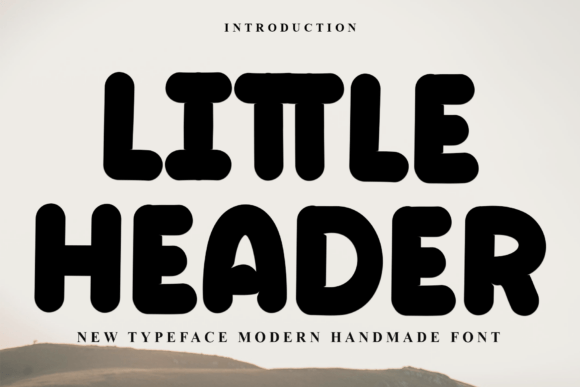
Evaluating Little Header: A Practical Guide to Casual, Hand-Drawn Typography
Selecting the right typeface for personal projects or informal branding often involves balancing aesthetic appeal with technical usability. While professional corporate identities typically demand structured sans-serifs or traditional serifs, creative endeavors require a different set of criteria. Little Header has emerged as a notable option in this space, specifically designed to bridge the gap between authentic hand-lettering and digital functionality. Understanding where this font fits within the broader typographic landscape requires looking beyond its visual charm to evaluate its technical specifications, appropriate use cases, and limitations compared to other casual display fonts.
Defining the Aesthetic and Technical Profile
At its core, Little Header is a casual and creative font that exudes warmth and friendliness. Unlike rigid geometric typefaces, its round, playful strokes create a relaxed and approachable feel. This organic structure is intentional; it mimics the natural imperfections of marker or brush lettering without sacrificing legibility at standard display sizes. For designers and content creators, this aesthetic serves a specific psychological function: it lowers the barrier to entry for the viewer, signaling that the content is personal, accessible, and human-centric.
Beyond the visual style, the technical foundation of Little Header distinguishes it from many free or basic novelty fonts. It is equipped with standard PUA (Private Use Area) Encoded glyphs. This feature is critical for users who do not have access to advanced OpenType panels or specialized typography software. PUA encoding allows special characters, alternates, and ligatures to be accessed directly through character maps or glyph panels in various application engines such as Adobe Photoshop, Corel, Adobe Illustrator, and Canva. This compatibility ensures that the font’s unique hand-drawn elements are usable across both professional design suites and accessible consumer-grade platforms, reducing friction during the creative process.
Comparing Little Header to Alternative Casual Styles
When evaluating typeface options, it is helpful to categorize alternatives based on their structural intent. Little Header occupies a specific niche that differs from other popular casual categories.
Versus Structured Handwritten Fonts
Many handwritten fonts prioritize uniformity to ensure they can function as body text. These typefaces often have consistent baseline alignment and standardized x-heights. In contrast, Little Header embraces a more erratic, expressive rhythm. While structured handwritten fonts are safer for longer paragraphs, Little Header offers superior personality for headlines, logos, and short-form graphics. If your project requires reading comfort over three or more lines of text, a structured alternative may be preferable. However, if the goal is immediate visual impact and emotional resonance in a limited space, Little Header’s looser construction is often the stronger choice.
Versus Vintage and Retro Display Fonts
Retro display fonts often rely on historical references, incorporating textures, distressed edges, or specific era-based proportions. While these can be effective for thematic projects, they sometimes carry baggage that limits versatility. Little Header maintains a contemporary, timeless quality. Its hand-drawn aesthetic adds a fun and unique touch without anchoring the design to a specific decade. For users seeking a friendly vibe that does not feel dated or overly stylized, this neutrality is a significant advantage over trend-dependent retro alternatives.
Versus Script and Calligraphy Fonts
Scripts connect letters to simulate continuous writing, which can sometimes hinder readability at smaller sizes or in all-caps settings. Little Header functions as a print-style hand-drawn font rather than a connected script. This distinction makes it significantly more versatile for social media graphics and invitations where clarity is paramount. Users comparing the two should consider the medium: scripts excel in formal elegance, while Little Header excels in casual clarity and modern approachability.
Strengths and Ideal Use Cases
The decision to utilize Little Header should be driven by specific project requirements rather than general preference. Its strengths are most apparent in contexts where tone is as important as information delivery.
- Social Media Graphics: The bold, rounded forms of Little Header perform exceptionally well in thumbnail environments. On platforms like Instagram or Pinterest, where users scroll quickly, the font’s high contrast and friendly geometry arrest attention without appearing aggressive. The PUA encoded glyphs allow creators to add swashes or alternates that prevent repetitive letterforms in square or vertical formats.
- Personal Invitations and Stationery: For baby showers, birthday parties, or casual weddings, the font provides a bespoke feel that generic system fonts cannot achieve. It strikes a balance between DIY authenticity and polished design, making printed materials feel curated yet intimate.
- Lifestyle and Craft Branding: Small businesses in niches such as baking, childcare, pet care, or handmade crafts benefit from this typeface. It visually communicates "handmade" and "caring" before the customer reads a single word of copy.
- YouTube Thumbnails and Video Titles: Content creators focusing on vlogs, tutorials, or family-oriented content often find that Little Header aligns better with their voice than standard bold sans-serifs. It reinforces the parasocial connection between creator and audience.
Tradeoffs and Limitations to Consider
No typeface is universally applicable, and an informed evaluation must acknowledge where Little Header falls short. Recognizing these limitations prevents costly redesigns or accessibility issues later in the project lifecycle.
Legibility at Small Sizes: The very traits that make this font charming—its uneven baselines and variable stroke widths—become liabilities at small point sizes. Below 18pt (depending on resolution), the details may muddy, and the playful spacing can look accidental rather than intentional. It is strictly a display font and should not be used for body copy, captions, or fine print.
Tone Mismatch for Formal Contexts: While warmth is an asset in many scenarios, it can undermine authority in others. Legal documents, financial reports, medical communications, or luxury branding typically require stability and precision. Using Little Header in these contexts could inadvertently signal a lack of professionalism or seriousness. Designers must evaluate whether the target audience expects gravitas or approachability.
Language Support Constraints: Like many specialty display fonts, character sets can sometimes be limited compared to comprehensive system families. Before committing to Little Header for multilingual projects, verify that the specific glyphs required for your language are included in the PUA encoding or standard character map. Assuming full Unicode support based on English previews is a common pitfall.
Overuse in Saturated Markets: Because friendly, hand-drawn fonts are currently popular in digital marketing, there is a risk of visual sameness. If your direct competitors are all using similar rounded display typefaces, adopting Little Header might help you blend in rather than stand out. In highly saturated markets, consider testing it against a cleaner geometric sans-serif or a more distinctive serif to see which creates better differentiation.
Making the Final Selection Decision
Choosing Little Header ultimately depends on the intersection of technical capability and communicative intent. If your workflow relies heavily on Canva or basic Adobe applications and you need immediate access to stylistic alternates without complex OpenType configuration, the PUA encoding makes this font a pragmatic efficiency tool. If your primary goal is to soften a brand’s image or add a human element to digital content, its aesthetic properties are aligned with that objective.
However, if your project demands extensive body text, multilingual support beyond Latin basics, or a tone of institutional authority, you should continue exploring alternatives. Compare Little Header against your top three contenders by mocking up actual content rather than just viewing alphabet specimens. Test it at the exact size and resolution intended for final output. Evaluate how the PUA glyphs interact with your specific layout constraints. By treating the selection process as a functional evaluation rather than purely an artistic choice, you ensure that the typography supports the project’s long-term success rather than just its initial visual appeal.
In the vast ecosystem of display typography, Little Header represents a specific solution to a specific problem: the need for digital type that feels analog, accessible, and technically compatible with modern mixed-software workflows. Whether it is the right solution depends entirely on the parameters of your current project and the expectations of your audience. Use the comparisons and tradeoffs outlined above to validate your choice with confidence, ensuring your typographic investment yields both aesthetic satisfaction and practical utility.